Scientists have unveiled a bionic hand that uses AI to assist amputees with everyday tasks. By integrating proximity and pressure sensors into a commercial prosthesis, they have enabled more intuitive movement. This approach aims to redefine how individuals with limb loss interact with their environment.
Subscribe
Biotechnology
Robotics
Bionic hand given AI ‘mind of its own’ to improve life of amputees

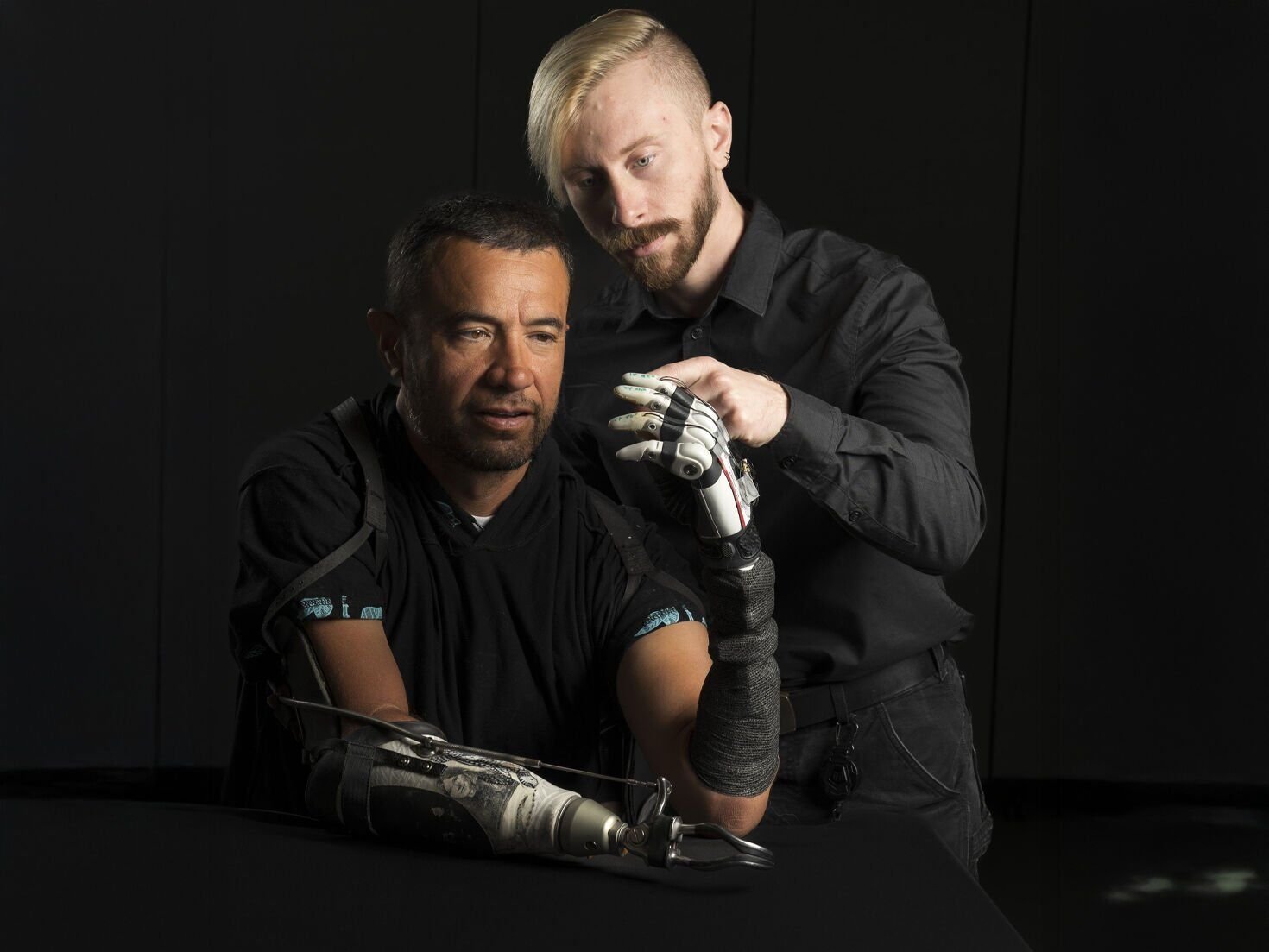
Photo by Conwaydailysun
Key Takeaways:
- Scientists integrated proximity and pressure sensors into a commercial bionic hand.
- An artificial neural network was trained on grasping postures.
- Researchers aim to improve everyday functions for amputees.
- This innovation highlights the growing role of AI in healthcare.
- The research appeared in a technology-focused outlet, suggesting far-reaching impact.
The Vision Behind the AI Bionic Hand
The recent breakthrough centers on a prosthetic hand that has been enhanced with artificial intelligence. Scientists behind this project hope to revolutionize how amputees perform daily tasks by lending the device a “mind of its own,” capable of adjusting to different grips and tactile situations.
Sensors and Neural Networks
By integrating proximity and pressure sensors into a standard commercial bionic hand, researchers have given the device the ability to detect objects and gauge the needed pressure. They then trained an artificial neural network on grasping postures, allowing the system to learn and adapt its movement in real time. This AI-driven approach aims to fine-tune the hand’s responses, making it more intuitive to use.
Implications for Amputees
The bionic hand’s design focuses on improving daily life: tasks like picking up fragile items or holding heavier objects could become simpler and more natural. With enhanced technology guiding the device, users may experience smoother transitions between different types of grips, removing some of the guesswork common with traditional prosthetics.
Broader Impact
While the complete details are not fully disclosed in the public domain, the project’s unveiling points to the growing presence of AI in next-generation healthcare solutions. By refining mobility technology for amputees, scientists and engineers are paving the way for further innovations. This bionic hand serves as a tangible example of how artificial intelligence can transform lives and drive progress in medical research.