A Denver-based entrepreneur wants to raise a colossal statue of Prometheus on the ruins of Alcatraz Island, calling it a beacon of America’s creative core. Critics question the grandiosity and accuse him of forcing a monumental eyesore onto San Francisco’s skyline.
Subscribe
Analysis and Opinions
Historical Sites
Great Balls Of Fire

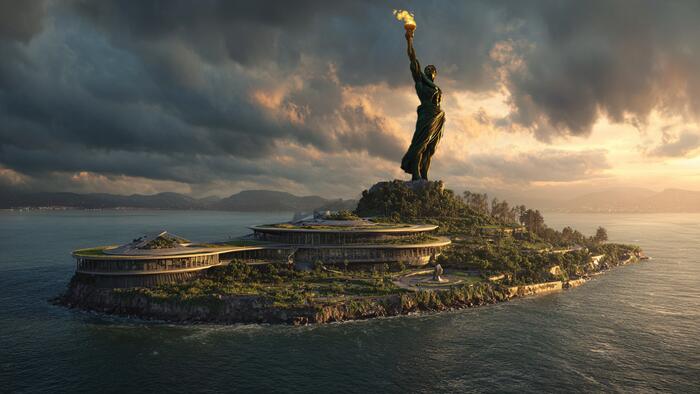
Photo by Zerohedge
Key Takeaways:
- Ross Calvin proposes a 350-foot statue of Prometheus on Alcatraz Island.
- Many criticize the project as a blend of phallicism and fascism.
- Calvin insists American culture needs bold, heroic art to escape its current “propaganda complex.”
- Alcatraz’s historical status is challenged by proponents of the statue, citing low tourist interest.
- Calvin sees Prometheus as a powerful symbol of creative freedom and the essence of American Manifest Destiny.
The Vision for a New Colossus
Ross Calvin is on a crusade to reinvigorate American art—and he’s chosen Alcatraz Island for his stage. He envisions a 350-foot statue of Prometheus towering over the San Francisco Bay, flouting what he considers the “putrid, sickly warm milk effect” of mainstream art. “For the last 100 years, we’ve been living in highly mythological times,” Calvin insists, arguing that society has lost touch with creativity.
Prometheus as America’s Symbol
Calvin frames Prometheus as the metaphorical spark for humanity’s progress. “Prometheus represents the fundamental power one recognizes when he looks up at the sky and finds it empty,” he says, explaining his belief that individuals must seize initiative in a world free of external divinity. He connects the Titan’s mythological struggle directly to the United States’ historical drive for self-determination, calling it “the true heart of American Manifest Destiny.”
A Clash over Alcatraz
Critics question the wisdom of placing such a towering figure on the island, an official national park site that once housed a notorious prison. “They call [the statue] a mix of phallicism and fascism,” Calvin notes, dismissing naysayers. He believes the island is “sacred to nobody” given its dilapidated state, pointing out that “93 percent of tourists ignore Alcatraz” altogether.
Art, Politics, and the ‘Propaganda Complex’
Calvin takes aim at both political extremes, arguing that the Left often propagates soft, “effeminate” art, while the Right fails to champion truly inspiring works. He says Hollywood churns out predictable blockbuster franchises, while music studios rely on rehashes of once-fresh ideas. By contrast, Calvin wants raw, powerful expressions that are heroic in nature—art that is “superordinate over politics.”
Manifest Destiny Reignited
Despite accusations of vanity and ostentation, Calvin sees his plan as an overdue statement of American resourcefulness. He calls for a “great works of beauty created with a pathos toward and admiration for all Americans.” The statue, he hopes, will serve as a catalyst, fostering in viewers a renewed confidence that transcends current politics.
Permission to Dream
Calvin bristles at the notion that he needs official approvals: “If you want to be a leading American, nobody on the planet can give you permission.” In his view, cultural changes rarely emerge from committees. Instead, he believes in channeling the spirit of historical figures who acted on an “unapologetic patriotic vision,” building monuments and traditions that stand the test of time.
Toward an Uncertain Horizon
While the Great Colossus of Prometheus is anything but certain, it underscores an ongoing debate about how a society preserves history and ignites future growth. In Calvin’s eyes, Prometheus is not just a statue—it is America’s reintroduction to its own creative grandeur. “They don’t want you to understand,” he warns, “They want you to believe that you have to ask their permission.” Instead, he invites the nation to remember a bold past and project that spirit into its cultural future.