In a rare show of unity, the U.S. House of Representatives has officially renamed its press gallery in honor of Frederick Douglass. Led by Representative Byron Donalds, R-Fla., this bipartisan move highlights Douglass’s essential role in American history and civil rights.
Subscribe
Breaking News
House renames press gallery after Frederick Douglass

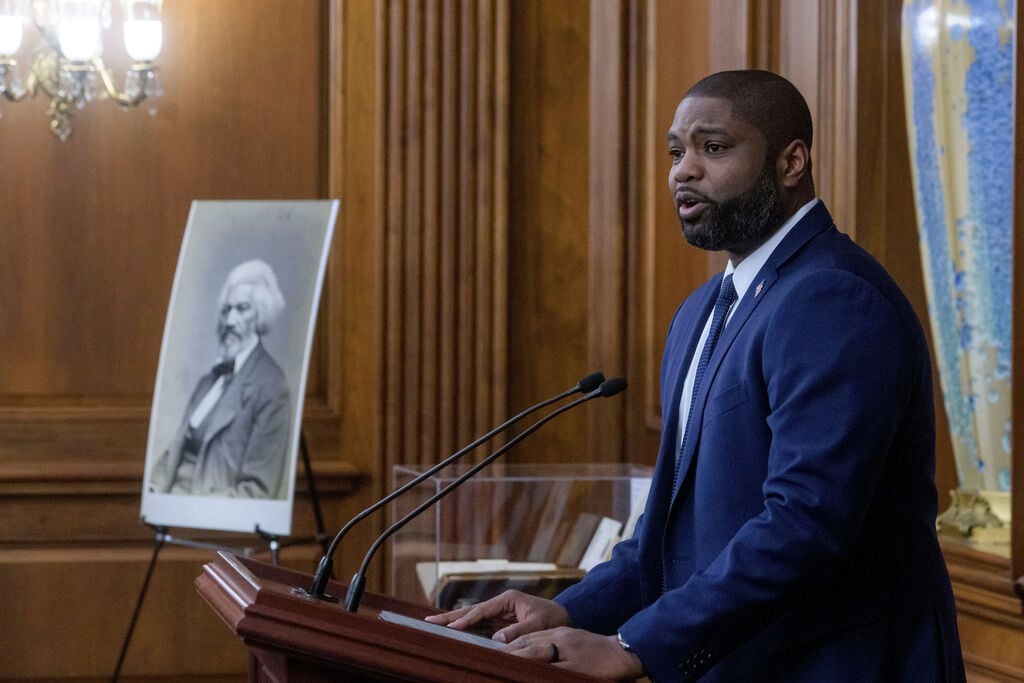
Photo by Scnow
Key Takeaways:
- The press gallery in the House chamber has been renamed after abolitionist Frederick Douglass.
- Representative Byron Donalds (R-Fla.) spearheaded the effort with bipartisan support.
- Douglass is celebrated for his critical writings and speeches, including “What to the Slave Is the Fourth of July?”
- Lawmakers see this move as a testament to Douglass’s enduring impact on U.S. civil rights.
- Honoring a historic figure in this prominent space underscores a shared respect for America’s past.
Renaming the Press Gallery
The United States House of Representatives took a significant step to honor Frederick Douglass, the renowned abolitionist, by renaming its press gallery. This decision underscores the Congressional commitment to recognizing influential figures in American history.
Bipartisan Support
The measure to rename the gallery was introduced and led by Representative Byron Donalds, R-Fla. The successful effort received broad, bipartisan backing, illustrating a rare show of unity across party lines. This signal of cooperation in Congress highlights Douglass’s universal admiration as a champion of freedom and equality.
Frederick Douglass’s Influence
Frederick Douglass is celebrated for his lifelong fight against slavery and for advocating civil rights. His speech, “What to the Slave Is the Fourth of July?” remains a defining text that challenged the nation’s conscience. By honoring Douglass in the House chamber, legislators acknowledge his legacy as a formidable voice that reshaped the conversation around liberty in the United States.
Public Recognition and Next Steps
Dedicating the press gallery underscores Douglass’s enduring relevance. His name now presides over a space that is central to how Americans receive news about their government. This recognition echoes the ongoing efforts within the nation’s institutions to remember, celebrate, and learn from pivotal figures who helped define the principles of justice and equality in American democracy.