Scientists are discovering that under the surface of Mars’ younger volcanoes lie hidden complexities, from evolving magma to layered eruptions, reshaping our understanding of the Red Planet’s volcanic past. By examining volcanic products at the surface, experts are revealing how magma moves and changes deep below, challenging long-held assumptions.
Subscribe
Space Technology
Mars’ “Young” Volcanoes Were More Complex Than Scientists Once Thought

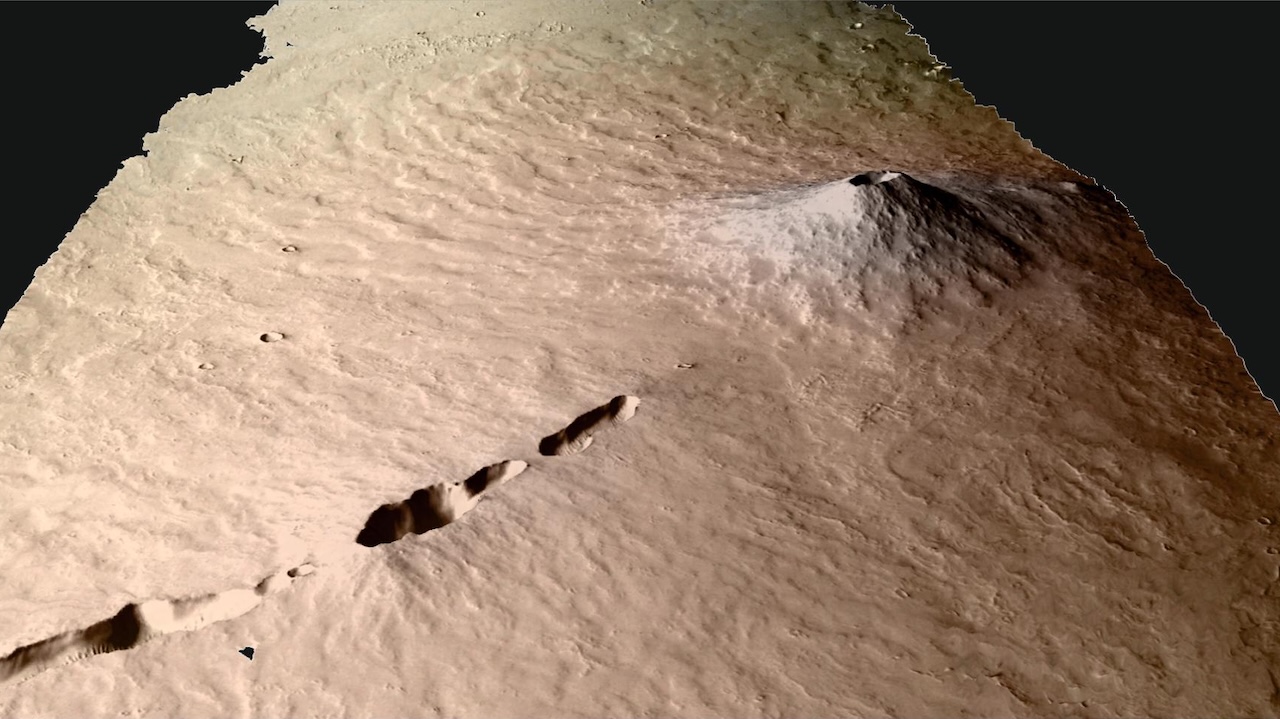
Photo by Astrobiology Web
Key Takeaways:
- Mars’ volcanic eruptions are more intricate than previously believed
- Magma evolves over time, impacting the nature and outcome of eruptions
- Studying surface materials sheds light on hidden magmatic systems
- Pavonis Mons emerges as a notable feature in this new research
- Geological Society of America provides vital insights on Martian geology
Mars’ Volcanic Complexity
What appears to be a single volcanic eruption is often the product of multiple hidden processes working deep below the planet’s surface. Recent findings suggest that magma on Mars moves, evolves, and changes over long periods of time before eventually erupting. This new perspective challenges the earlier assumption that younger Martian volcanoes were comparatively simple.
Revealing Hidden Magma Systems
To better understand how volcanoes work, scientists turn to the materials they deposit on the surface. These volcanic products serve as crucial windows into the magmatic systems that feed eruptions. By analyzing the layers and composition of Martian volcanic remnants, researchers learn how magma chambers shift and evolve. Pavonis Mons, alongside other volcanic features on Mars, underscores this complexity, reflecting a deeper story beneath the Red Planet’s surface.
Implications for Planetary Research
The Geological Society of America has highlighted the importance of such discoveries in reshaping our knowledge of Martian geology. What began as an effort to grasp why these volcanoes looked simpler than Earth’s now reveals a surprisingly rich tapestry of geological activity. Armed with these insights, scientists are poised to explore new questions about the formation and evolution of Mars—an essential step in understanding the Red Planet’s past and its potential for supporting life.