US Secretary of State Marco Rubio recently reaffirmed America’s decades-long policy of avoiding explicit acknowledgment of Israel’s nuclear capabilities. Lawmakers, including Representative Joaquin Castro, argue this ambiguity raises concerns about oversight, red lines, and the implications for US foreign aid.
Subscribe
Global Conflicts
International Politics
Middle East
Policy Analysis
Rubio: ‘Most Of The World Assesses’ That Israel Has Nuclear Weapons

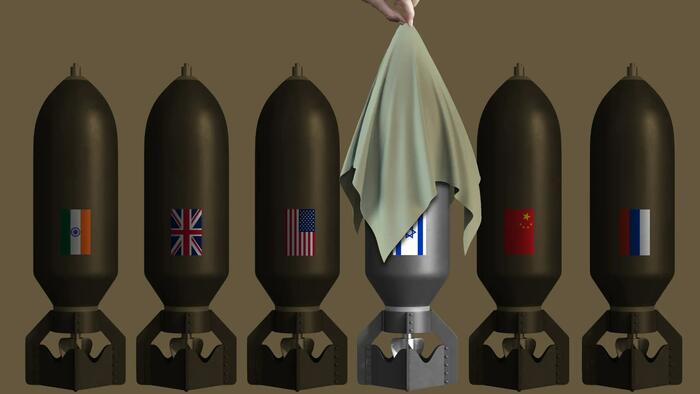
Photo by Zerohedge
Key Takeaways:
- Rubio confirms “most of the world” believes Israel possesses nuclear weapons
- US maintains a longstanding policy of non-disclosure on Israel’s arsenal
- Lawmakers question red lines for possible nuclear use
- Concerns arise over 1976 Symington Amendment restrictions
- Iran’s nuclear program is scrutinized more openly than Israel’s suspected arsenal
The Suspicions and Official Mutism
US Secretary of State Marco Rubio, asked on Wednesday about Israel’s nuclear capacity, acknowledged that “most of the world assesses” Israel possesses nuclear weapons. Still, Rubio reaffirmed the longstanding US policy of not confirming or denying this arsenal.
Representative Joaquin Castro (D-TX), who has led efforts to gain clarity from the State Department, pressed Rubio during a congressional hearing. “I have to say … that’s a very bizarre response,” Castro remarked. While calling on Rubio to clarify the American stance, Castro criticized the lack of transparency in Washington’s official approach to Israel’s nuclear status.
A Generations-Long Agreement
Rubio explained that the United States and Israel hold an arrangement dating back to President Richard Nixon, wherein neither nation publicly acknowledges Israel’s nuclear program. This non-disclosure has allowed the US to continue providing military aid without triggering the 1976 Symington Amendment, a law prohibiting assistance to countries that acquire nuclear technology outside international safeguards.
Red Lines Obscured
Castro voiced worry about what could prompt Israel to deploy nuclear weapons, emphasizing that Congress and the public should be informed of any potential “red lines.” Rubio conceded Castro’s viewpoint was “fair” and offered the possibility of addressing further inquiries through a classified briefing.
Iran in the Spotlight
Questions also persist regarding Iran’s nuclear ambitions, especially since Iran is a member of the Nuclear Non-Proliferation Treaty (NPT) and—for a time—its supreme leader, Ayatollah Ali Khamenei, issued a Fatwa banning the development of nuclear weapons. The contrasting openness concerning Iran versus the silence around Israel’s reported stockpile, estimated at 70 to 300 warheads, continues to stir debate.
Implications for US Foreign Policy
Critics argue that Washington’s silence leaves policymakers and voters alike unclear about potential risks and treaties linked to foreign aid. Ambiguity around Israel’s nuclear capability, in turn, shapes Middle East relations. As Representative Castro and other lawmakers have noted, the stakes for war and peace in the region are too high to leave such questions unanswered behind closed doors.