The U.S. Supreme Court will hear ExxonMobil’s arguments over Cuban oil assets seized more than half a century ago. Valued at $70 million in 1960, the assets are now the subject of a $1 billion claim due to accrued interest.
Subscribe
International Politics
Policy Analysis
Supreme Court to Rule on Exxon’s $1 Billion Cuba Assets Claim

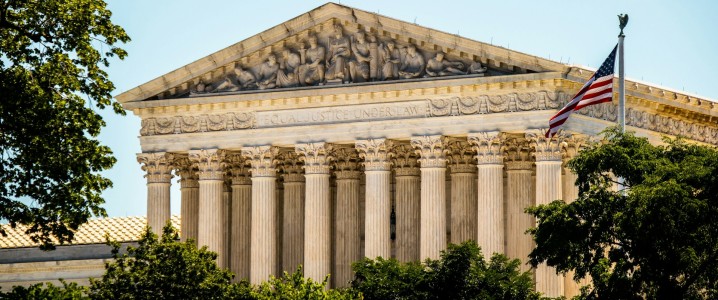
Photo by Oil Price
Key Takeaways:
- The U.S. Supreme Court is deciding on Exxon’s claim over seized Cuban assets
- The Trump Administration supports ExxonMobil’s position
- The original assets were valued at $70 million in 1960
- Exxon now seeks $1 billion due to interest accrued
- The case tests the scope of a U.S. law on seized foreign property
The Supreme Court Showdown
ExxonMobil is heading to the U.S. Supreme Court in a closely watched case concerning assets seized by the Cuban government in 1960. The company argues that a U.S. law allows it to claim damages for property confiscated by foreign governments. The Court’s decision could have lasting implications for how American firms pursue compensation for seized foreign holdings.
A Historical Dispute
In 1960, assets belonging to subsidiaries of Standard Oil were confiscated by the Cuban government. At that time, the holdings were worth roughly $70 million. These assets, spanning oil operations once owned by Standard Oil, have become a cornerstone of Exxon’s current legal action.
Exxon’s Billion-Dollar Claim
Exxon now asserts that the original $70 million value has ballooned to $1 billion, with decades of interest driving the dramatic increase. The company believes it is entitled to compensation that accounts for financial losses accumulated since the initial seizure.
The Legal Landscape
The Trump Administration has thrown its support behind Exxon, underscoring the U.S. government’s belief in the importance of safeguarding American corporate interests abroad. The dispute centers on laws enabling U.S. companies to seek damages when their foreign assets are taken without compensation. Exxon’s argument extends to the broader question of whether, and how, such cases can be litigated under U.S. jurisdiction.
Potential Outcomes
The Supreme Court’s ruling will likely clarify the scope and application of these statutes. A decision favoring Exxon could set a significant precedent for other companies seeking damages for historic seizures. At the same time, a ruling that limits such claims might close a major avenue for corporate recourse. The final word from the Court will determine how Exxon’s multi-decade quest for compensation will conclude—and could shape future claims involving foreign-confiscated U.S. assets.