Most dictionaries define a motorcycle as having two wheels and an engine, yet 141 years ago, a four-wheeled Daimler “riding carriage” changed history. This unexpected origin blurs the lines of today’s definitions and offers a unique perspective on how automobiles and motorcycles evolved.
Subscribe
Uncategorized
The First Motorcycle Ride Took Place 141 Years Ago Today

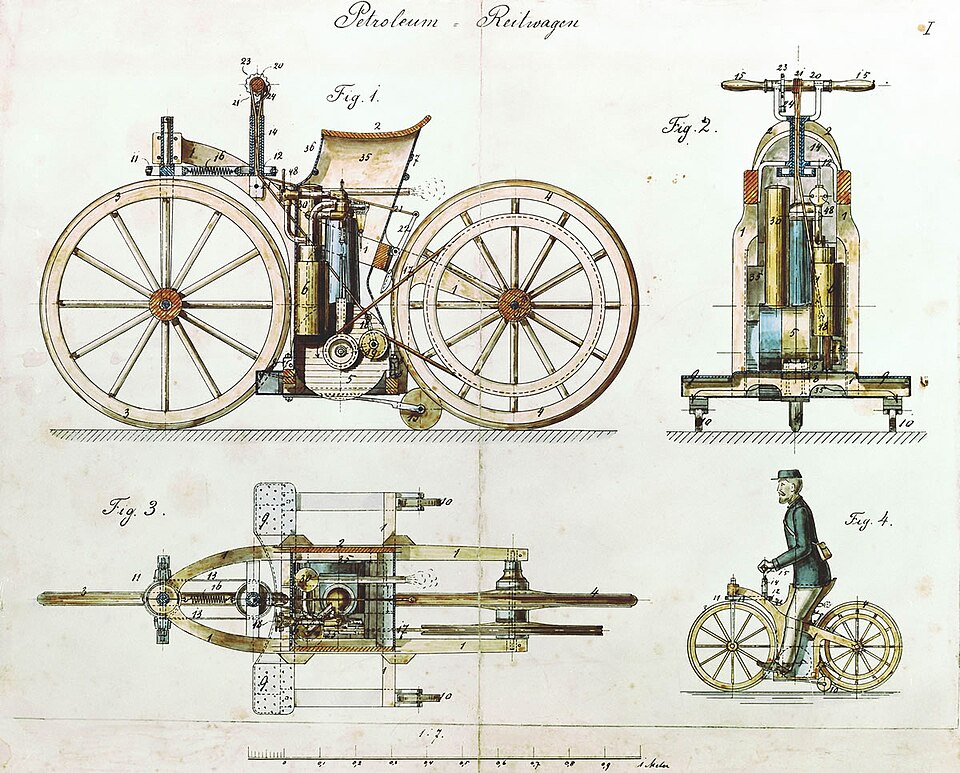
Photo by Hagerty, Inc.
Key Takeaways:
- The Daimler Reitwagen, a four-wheeled vehicle, is widely regarded as the first motorcycle.
- Standard dictionaries define motorcycles as having an engine and two wheels.
- The first automobile introduced to the world had three wheels.
- These historical oddities highlight ambiguous early definitions in automotive history.
- The Reitwagen’s story still draws fascination and debate among enthusiasts around the globe.
A Curious Debate Over Wheels
How many wheels should a motorcycle have? According to most dictionaries, including the Oxford English Dictionary, Merriam-Webster, and Cambridge, a motorcycle is defined as a two-wheeled engine-powered vehicle. Yet 141 years ago, a machine with four wheels sparked a debate that still resonates: the Daimler riding carriage, or Reitwagen, is recognized as the world’s first true motorcycle.
Defining the Motorcycle
When we talk about motorcycles, the image of two wheels almost always comes to mind. Dictionaries affirm that a motorcycle has two wheels, usually driven by an internal combustion engine. But the Reitwagen challenges that norm. Created by Gottlieb Daimler and Wilhelm Maybach in the 1880s, this peculiar invention stands at the intersection of a carriage and a motorbike.
Inside the Daimler Reitwagen
Although it resembled a carriage on four wheels, the Reitwagen amazed onlookers from the moment it first took to the road. It boasted an internal combustion engine but utilized training wheels on each side to maintain balance—arguably pushing the boundary of what we now consider a motorcycle. Nevertheless, its status as a technological first makes it pivotal in the history of powered personal transportation.
A Footnote on the First Automobile
Intriguingly, while the Reitwagen had four wheels, the first automobile itself—often attributed to Karl Benz—traveled on three. Early innovators in the automotive industry frequently mixed and matched wheel configurations, as the concept of a “car” or “motorcycle” had yet to form a solid definition. This transitional period led to today’s standard categories, yet it also endures as a space for continued discussion.
Shaping Automotive History
The Reitwagen’s tale underscores how technology evolves in a fluid fashion, sometimes rendering official definitions insufficient. More than a century later, enthusiasts and historians continue to debate the origin stories of motor vehicles, proving that the lines separating cars and motorcycles can still blur. Ultimately, the Reitwagen stands as a testament to human curiosity and the relentless pursuit of innovation.