At Livingston Collegiate Academy in New Orleans East, a small class of ninth graders built a miniature pumping system to keep their city from flooding—at least in theory. Their classroom exercise underscored the real complexities of water management when the model failed.
Subscribe
Education Resources
These New Orleans kids built a model of the city’s pumps. Then they watched it fail.

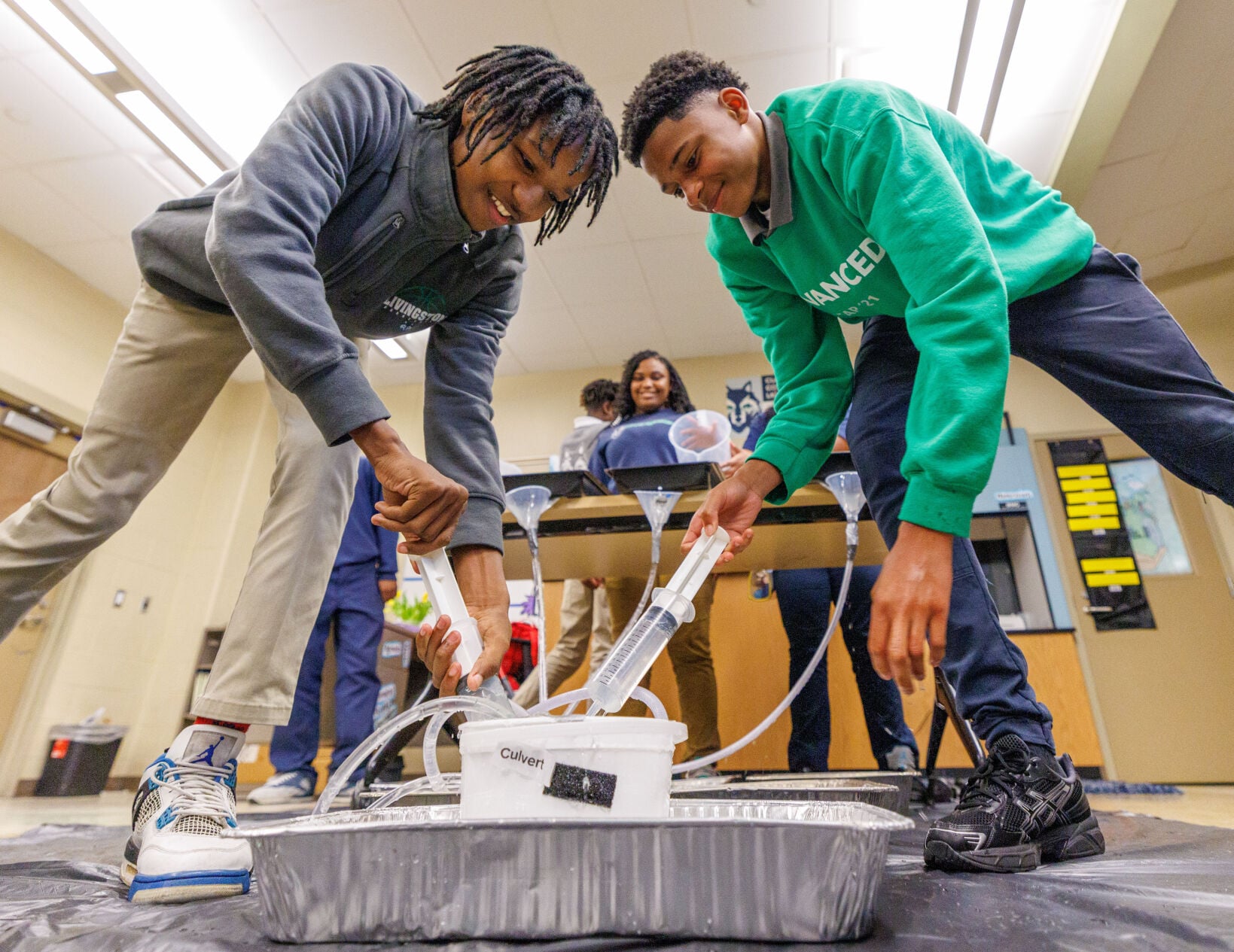
Photo by Nola.com
Key Takeaways:
- Students at Livingston Collegiate Academy created a model of New Orleans’ pumps.
- They used large syringes to simulate the city’s flood control system.
- The class project showcased how classroom learning can reflect real-world challenges.
- The model eventually failed to keep simulated floodwaters at bay.
- Teacher-led, hands-on experiments help students grasp the difficulty of flood management.
A Hands-On Lesson at Livingston Collegiate Academy
On a recent afternoon at Livingston Collegiate Academy in New Orleans East, ninth grade science teacher Deandria Barnes guided her students through a small-scale project with massive real-world implications. Each student held a large syringe—a makeshift pump in a miniature version of the city’s famed flood defense system. Their collective goal? As Ms. Barnes put it: “Keep the city from flooding.”
Keeping the City Dry—At Least in Miniature
Using the syringes to simulate pumping water out, the students worked together to move water away from the model’s “streets” and “buildings.” Their enthusiasm soared as they tested ways to move water efficiently, yet it didn’t take long before leaks formed and pressure dropped—common struggles faced by engineers planning flood prevention in a city prone to high water.
When the Model Fails
Despite their best efforts, the model pumps eventually failed. This hands-on mishap served as a stark reminder of the complex reality of New Orleans’ water management. The delicate balance between storm surges, outdated infrastructure, and the city’s natural vulnerability was on full display, even on this miniature scale.
Reflections on Real-World Challenges
The classroom experiment makes clear why New Orleans remains consistently on high alert for hurricane damage and seasonal flooding. While the students’ system did not fully prevent the simulated flooding, it taught them one salient lesson: real engineering solutions demand constant testing and adaptation.
Looking Ahead
Even though the model could not overcome the rising water, Ms. Barnes considers it a success—an illustration that failure can be the greatest teacher. The next step, she suggests, is for her students to continue refining their design, informed by this practical lesson in problem-solving.