A new study simulates how a rare collision with asteroid Bennu could dramatically disrupt Earth’s climate and ecosystems, highlighting significant global risks despite the slim chance of impact.
Subscribe
Analysis and Opinions
Breaking News
Space Technology
What would happen if the OSIRIS-REx asteroid Bennu smashed into Earth in 2182?

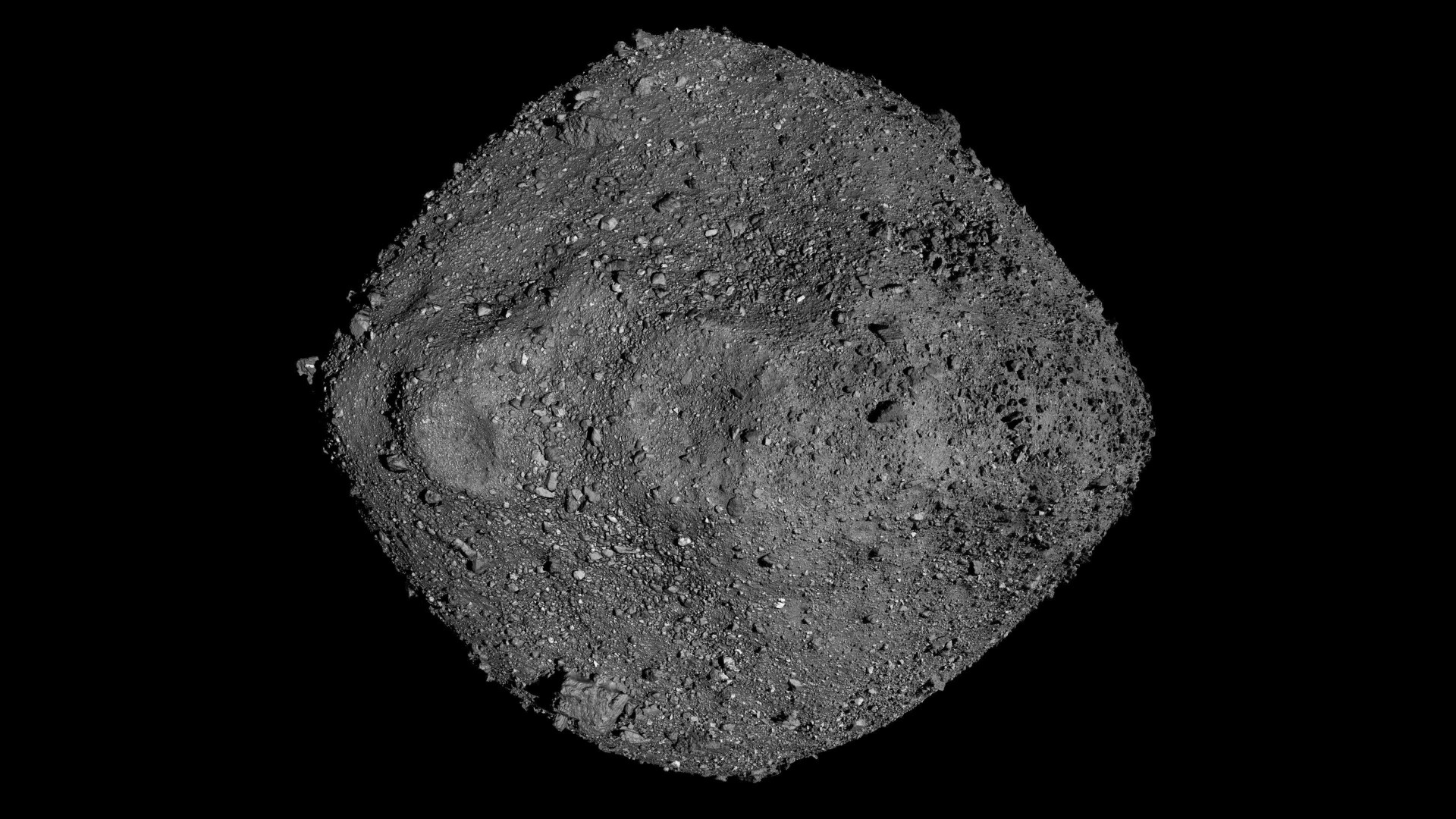
Photo by Space
Key Takeaways:
- Asteroid Bennu poses a small but significant threat to Earth with a 1-in-2,700 chance of impact in 2182.
- Researchers simulated the aftermath, predicting drastic climate disruptions from massive dust injection into the atmosphere.
- A potential 20–30% reduction in global photosynthesis could threaten ecosystems and food security.
- Unexpectedly, oceanic plankton might recover quickly due to iron-rich dust, offering ecological resilience.
- Understanding these potential impacts is crucial for global preparedness against unlikely but devastating events.
Asteroid Bennu’s Slim Chance, Earth’s Big Risk
Asteroid Bennu and Its Significance
What would happen if Earth were struck by a medium-sized asteroid? Researchers at the IBS Center for Climate Physics (ICCP) at Pusan National University in South Korea have tackled this question by simulating the potential climatic and ecological impacts of such an event. Their focus: asteroid Bennu, a space rock roughly the size of the Empire State Building.
Bennu has a very small chance—about 1-in-2,700, or 0.037%—of colliding with our planet in September 2182. While the odds may seem insignificant, the implications of such an impact are anything but. “On average, medium-sized asteroids collide with Earth about every 100–200 thousand years,” explained Professor Axel Timmermann, a contributing author of the study. “This means that our early human ancestors may have experienced some of these planet-shifting events before with potential impacts on human evolution and even our own genetic makeup.”
Simulating the Aftermath
Using advanced climate models and the supercomputer Aleph, the researchers sought to understand the potential consequences of a Bennu-sized asteroid impact. “Depending on the collision parameters, an impact between a medium-sized asteroid and Earth could cause regional to large-scale devastation,” wrote Timmermann and his colleague Lan Dai in their study. “Beyond immediate effects such as thermal radiation, earthquakes, and tsunamis, asteroid impacts would have long-lasting climatic effects by emitting large quantities of aerosols and gases into the atmosphere.”
Climate Disruptions
The study revealed that an impact could inject approximately 100–400 million tons of dust into the atmosphere. This massive dust cloud would lead to significant climatic changes:
- Global Cooling: A potential cooling of up to 39 degrees Fahrenheit (4 degrees Celsius).
- Reduced Rainfall: A 15% decrease in global precipitation.
- Ozone Layer Depletion: About 32% reduction in ozone levels.
These changes could dramatically alter weather patterns and environmental conditions worldwide.
Ecological Impacts on Photosynthesis
One of the most profound effects would be on photosynthesis. “The abrupt impact winter would provide unfavorable climate conditions for plants to grow, leading to an initial 20–30% reduction of photosynthesis in terrestrial and marine ecosystems,” noted Lan Dai. “This would likely cause massive disruptions in global food security.”
Such a decline in photosynthesis could lead to food shortages and have cascading effects on all forms of life dependent on plant growth, both on land and in the oceans.
Surprising Findings in Marine Ecosystems
Amid the grim projections, the researchers uncovered an unexpected silver lining in marine ecosystems. Their simulations showed that oceanic plankton might recover more quickly than terrestrial plants, rebounding within six months and potentially exceeding normal levels afterward.
“We were able to track this unexpected response to the iron concentration in the dust,” said Timmermann. Iron is a vital nutrient for algae growth, and the dust from the impact would be rich in this element. “Depending on the iron content of the asteroid and of the terrestrial material that is blasted into the stratosphere, the otherwise nutrient-depleted regions can become nutrient-enriched with bioavailable iron, which in turn triggers unprecedented algae blooms.”
These algae blooms could support marine life and might help mitigate some of the negative impacts on the biosphere.
Implications for Humanity
The prospect of rapid climate change and ecosystem collapse presents significant challenges. “Less attention has been paid to the effects of medium-sized asteroid collisions, which are far more frequent than the ‘planet killer’ asteroids but yet still can have marked global consequences,” the study emphasized.
Understanding these potential impacts is crucial. “Our simulated climatic and ecological responses to dust injections from medium-sized asteroid collisions provide the basis to quantify the possible effects of abrupt events on planetary life,” the researchers concluded. This knowledge could prove invaluable in developing strategies to prepare for and possibly mitigate the effects of such rare but devastating events.
While the likelihood of Bennu striking Earth remains low, the study serves as a stark reminder of the vulnerabilities our planet faces and the importance of scientific research in safeguarding our future.