A newly released U.S. National Security Strategy repositions its highest priority to the Western Hemisphere, marking a decisive shift from years of China-centric rhetoric. This document also acknowledges, for the first time, the possibility that the United States may not maintain indefinite military overmatch over China.
Subscribe
Analysis and Opinions
Defense Spending Trends
Global Conflicts
International Politics
Policy Analysis
America’s New National Security Strategy: A Surprise Departure On China Policy

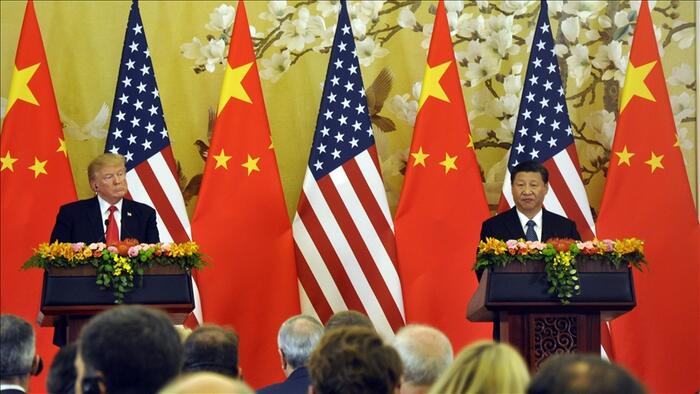
Photo by Zerohedge
Key Takeaways:
- The new National Security Strategy reasserts a “Trump Corollary” to the Monroe Doctrine, making the Western Hemisphere the top priority.
- China is no longer defined as the primary or pacing threat.
- Military overmatch may not be assured, especially in a potential conflict over Taiwan.
- A purely economic focus now drives U.S. competition with China.
- Allies are expected to step up their defense spending, signaling a less unilateral approach from the United States.
A Refocused Strategy
The latest U.S. National Security Strategy heralds a significant departure from previous documents by emphasizing the Western Hemisphere as America’s foremost priority. In a striking move, the document states that the United States will “assert and enforce a ‘Trump Corollary’ to the Monroe Doctrine.” This shift involves reinforcing homeland and border security, redoubling efforts against migration and cartels, and pulling back from regions deemed less vital to American interests.
Downgrading China’s Threat Level
One of the most notable revelations is China’s repositioning within the strategy. The new blueprint for U.S. policy stops short of designating China as its top overall threat—unlike prior characterizations that called it the “most consequential challenge” or “pacing threat.” Instead, China is portrayed predominantly as an economic competitor and a source of supply chain vulnerabilities. Military concerns remain, but the document’s language implies that China no longer stands at the apex of American defense priorities.
Military Overmatch and Taiwan
For the first time in such an official document, there is an acknowledgment that the United States may not hold permanent military superiority over China. Assessing the risk of conflict over Taiwan, the strategy admits that preserving “military overmatch” is an ideal goal rather than a guaranteed reality. The text even suggests that if allies in the “First Island Chain” fail to significantly boost their defense contributions, the United States might lack sufficient resources to defend Taiwan.
Moving Away from Ideological Confrontation
Gone are the strong ideological undertones that dominated previous foreign policy statements. The new framework indicates that Washington will not insist on democratic reforms or other internal changes in nations with different systems of governance. Rather than engaging in a “democracy vs. autocracy” showdown, the United States now seems to focus on building “good relations” wherever possible, prioritizing pragmatic and commercial considerations over ideological ones.
Economics at the Heart of Competition
Underpinning the downgrading of China’s threat profile is a clear emphasis on economics. The U.S. government frames the competition largely in “economic” terms, viewing the quest for secure supply chains and industrial capacity as paramount. The strategy outlines plans to form an economic alliance capable of exerting greater leverage over China, acknowledging that the U.S. alone may no longer wield enough power to dictate terms.
Challenges for Allies and America’s Future
Yet this pivot raises complex questions for U.S. allies. While Washington seeks to forge a united front against China on trade and industry, it also insists on partner nations taking up more responsibility for their own defense. The document highlights a tension: it is unclear if those same allies will sacrifice their economic interests to support the United States. Ultimately, the new approach signals a calculated rebalancing of U.S. priorities—one that seeks to solidify America’s standing in its immediate neighborhood while conceding that global hegemony may no longer be a foregone conclusion.