The James Webb Space Telescope captures the universe in stunning detail—but are its vivid images true to life? Explore how scientists bring unseen infrared data into vibrant color.
Subscribe
Analysis and Opinions
Space Technology
Are James Webb Space Telescope images really that colorful?

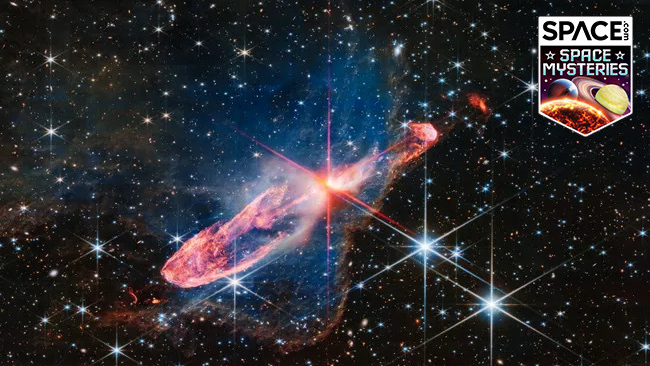
Photo by Space
Key Takeaways:
-
JWST Captures Invisible Infrared Light: The telescope observes wavelengths beyond human vision, requiring translation into visible colors.
-
Colors Are Assigned to Represent Wavelengths: Scientists add colors to different infrared wavelengths to create the final images.
-
Images Are Not Direct Representations: The vibrant images aren’t how celestial objects would appear to the naked eye.
-
Coloring Enhances Scientific Understanding: Adding color highlights features and findings, aiding both scientists and the public.
-
Combination of Filters Creates Depth: Using multiple filters allows for a comprehensive view of cosmic objects.
Unveiling the Universe Through Color
The James Webb Space Telescope (JWST) has mesmerized the world with its breathtaking images of the cosmos, showcasing celestial wonders in vivid hues of blues, reds, and golds. But do these cosmic objects truly appear so colorful? According to scientists, the answer is more complex than one might think.
Seeing Beyond the Visible Spectrum
JWST is an infrared telescope, designed to observe the universe in wavelengths of light that are invisible to the human eye. Infrared light has longer wavelengths than the visible red light we can see. Alyssa Pagan, a science visuals developer at the Space Telescope Science Institute (STScI), explains that because we cannot see infrared light, the colors in JWST’s images are not direct representations. “The quickest answer is, we don’t know,” Pagan says regarding how these objects would look to us.
The Art and Science of Coloring Space
To create these stunning images, JWST captures data using multiple filters, each sensitive to specific ranges of infrared wavelengths. The telescope’s Near Infrared Camera employs six filters to collect this data. Scientists like Pagan and her colleague Joe DePasquale then assign visible colors to these different wavelengths—longer wavelengths are mapped to reds, while shorter ones become blues or purples. This translation from invisible to visible light allows us to visualize and study these distant phenomena.
Enhancing Images for Insight
The added colors serve a vital purpose beyond aesthetic appeal. By highlighting different features with specific colors, scientists can emphasize elements that are crucial to their research. This process can reveal areas of star formation, the composition of nebulae, or the structure of distant galaxies. While adjustments are made to enhance visibility and engagement, the goal is to maintain scientific accuracy.
A Different View from Human Eyes
If we were able to look at these celestial objects ourselves, the view would differ significantly from JWST’s images. Our eyes are limited to the visible spectrum and lack the sensitivity of the telescope’s instruments. Even telescopes like the Hubble Space Telescope, which operates in the visual and ultraviolet ranges, present different aspects of the same objects due to these differences in observed wavelengths.
Case Study: The Pillars of Creation
Comparing images of the iconic Pillars of Creation taken by JWST and Hubble illustrates this point. Hubble’s image shows large portions of the pillars in dark reds, corresponding to longer visible wavelengths. JWST’s infrared image renders the same structures in golden and orange tones, revealing details obscured in the Hubble image due to infrared light’s ability to penetrate gas and dust.
Bridging Science and Public Engagement
By transforming infrared data into colorful images, scientists bridge the gap between complex scientific observations and public understanding. “We’re just trying to enhance things to make it more scientifically digestible and also engaging,” Pagan notes. These images not only advance astronomical research but also inspire curiosity and appreciation for the universe.
Conclusion
While the colorful images from the James Webb Space Telescope may not represent the universe exactly as we would see it, they offer invaluable insights into celestial phenomena beyond our natural perception. Through the careful application of color and imaging techniques, scientists unlock secrets of the cosmos, bringing the invisible into view and expanding our understanding of the vast universe we inhabit.