In a groundbreaking discovery, Georgia Tech researchers have achieved a first-ever 5+ oxidation state in praseodymium, potentially revolutionizing technologies reliant on rare earth elements. This advancement could lead to new magnetic and optical properties, enhancing applications from quantum devices to electronic equipment.
Subscribe
Breaking News
Quantum Computing
Top Research Institutions
Georgia Tech Researchers Make an Elemental Discovery
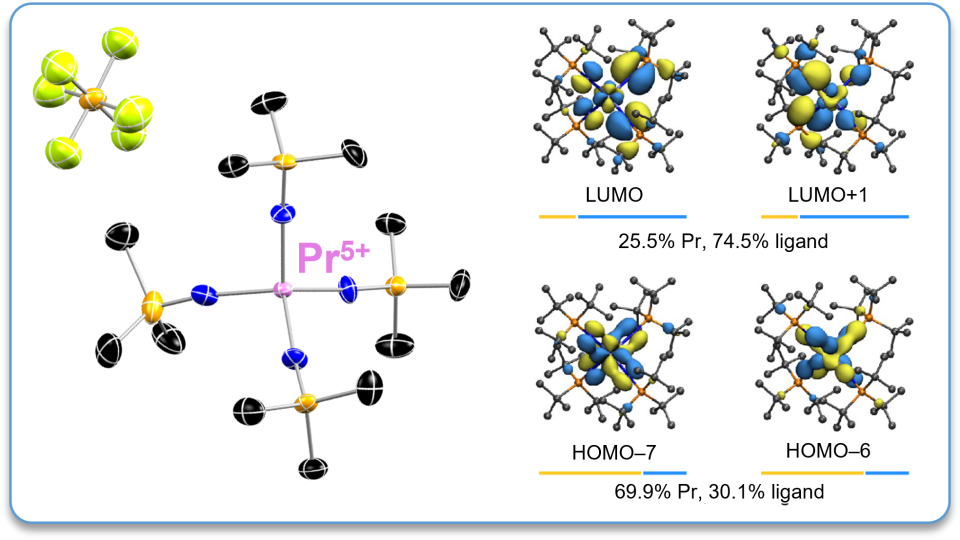
Photo by Georgia Institute Of Technology
Key Takeaways:
- First-ever 5+ oxidation state achieved in praseodymium
- Discovery could unlock new magnetic and optical properties in rare earth elements
- Potential to improve extraction and separation processes, reducing environmental waste
- Advancement may broaden applications in quantum technology and electronic devices
- Research supported by the National Science Foundation and the U.S. Department of Energy
A Quantum Leap in Lanthanide Chemistry
A longstanding mystery in the world of chemistry has been unraveled by researchers at Georgia Tech. For the first time ever, the rare earth element praseodymium has achieved a 5+ oxidation state—a discovery that could have far-reaching implications for modern technology.
The Challenge of Lanthanides
Lanthanides, also known as rare earth elements (REEs), are a group of 15 metallic elements crucial to today’s technological landscape. Their similar chemical and physical properties make them notoriously difficult to separate and purify. “Lanthanides are difficult to mine and separate,” noted the research team, emphasizing the challenges faced in harnessing these elements for practical use.
Breaking New Ground
The breakthrough came when praseodymium, a lanthanide, was successfully stabilized in a 5+ oxidation state. “For the first time ever, praseodymium achieved a 5+ oxidation state,” said Henry “Pete” La Pierre, an associate professor in Georgia Tech’s School of Chemistry and Biochemistry. Historically, higher oxidation states in lanthanides were predicted but remained unseen due to their instability.
Implications for Technology
This unprecedented achievement could unlock new magnetic and optical properties in rare earth elements. “If you can stabilize a higher oxidation state, it could lead to entirely new magnetic and optical properties,” La Pierre explained. Such properties are essential in a myriad of applications, from medical imaging devices to smartphones and missile technology.
Advancing Rare Earth Extraction
Beyond potential technological enhancements, the discovery may revolutionize how rare earth elements are extracted and separated. The current processes are “painstaking and inefficient, generating a significant amount of waste.” Improved oxidation chemistry could lead to more efficient, environmentally friendly methods, addressing global supply challenges for these critical materials.
Expert Insights
La Pierre equated discovering a new oxidation state to finding a new element altogether. “A new oxidation state tells us what we don’t know and gives us ideas for where to go,” he said. This sentiment underscores the transformative nature of the research, hinting at new directions in both chemistry and material science.
Looking Ahead
The researchers believe this advancement will broaden the technical applications of rare earth elements in fields like quantum technology and electronics. “Research in lanthanides has already yielded significant dividends for society in terms of technological development,” La Pierre added, expressing optimism for future innovations stemming from their findings.
Support and Acknowledgments
This research was supported by grants from the National Science Foundation and the U.S. Department of Energy, reflecting the significance and promise of the work conducted at Georgia Tech.
Conclusion
Georgia Tech’s discovery marks a significant milestone in the study of rare earth elements, with the potential to impact various high-tech industries profoundly. As the scientific community builds upon this breakthrough, the world may soon witness a new era of technological advancements powered by the humble lanthanides.