Georgia Tech is set to revolutionize scientific research with Nexus, a cutting-edge AI supercomputer funded by a $20 million NSF grant. This powerful tool will accelerate breakthroughs across various fields, providing researchers nationwide with unprecedented access to advanced AI resources.
Subscribe
Breaking News
Top Research Institutions
Georgia Tech to Build $20M National AI Supercomputer
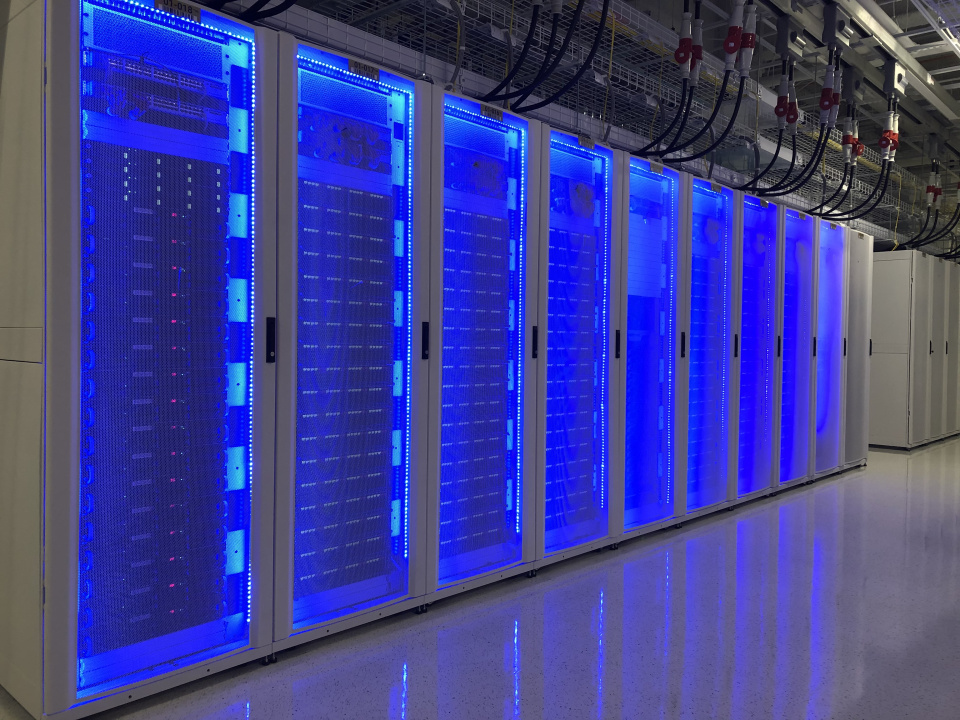
Photo by Georgia Institute Of Technology
Key Takeaways:
- Georgia Tech received a $20 million NSF grant to build Nexus, an advanced AI supercomputer.
- Nexus aims to democratize AI access for researchers across the United States.
- The supercomputer boasts over 400 quadrillion operations per second and massive storage capabilities.
- Collaboration with the University of Illinois enhances national research infrastructure.
- Nexus is expected to be completed by spring 2026 and will tackle urgent scientific challenges.
A New Era of Scientific Discovery
Georgia Tech is poised to transform the landscape of scientific research with the creation of Nexus, one of the most advanced AI-focused supercomputers in the United States. Backed by a $20 million grant from the National Science Foundation (NSF), Nexus is designed to accelerate breakthroughs across disciplines—from medicine and clean energy to brain research and robotics.
Unprecedented Computational Power
At the heart of Nexus lies an impressive technological feat. The supercomputer can perform over 400 quadrillion operations per second—the equivalent of everyone on Earth executing 50 million calculations each second. Equipped with 330 trillion bytes of memory, Nexus can handle complex problems and vast datasets with unparalleled efficiency.
“Nexus combines the power of AI and high-performance computing,” project details reveal. “It will feature 10 quadrillion bytes of flash storage, equivalent to about 10 billion reams of paper. Stacked, that’s a column reaching 500,000 km high—enough to stretch from Earth to the moon and a third of the way back.”
Democratizing AI Research
Designed with accessibility in mind, Nexus will provide researchers across the country with advanced computing tools through a simple, user-friendly interface. Scientists from any U.S. institution can apply to use the supercomputer, making state-of-the-art AI infrastructure available beyond traditional tech hubs.
“This supercomputer will help level the playing field,” said Suresh Marru, principal investigator of the Nexus project and director of Georgia Tech’s new Center for AI in Science and Engineering (ARTISAN). “It’s designed to make powerful AI tools easier to use and available to more researchers in more places.”
Tackling Urgent Challenges
Nexus is set to empower scientists to address some of the most pressing issues of our time. Whether it’s developing new medicines, advancing clean energy solutions, or unraveling the complexities of the human brain, the supercomputer’s formidable capabilities will be instrumental.
“Georgia Tech is proud to be one of the nation’s leading sources of AI talent and technologies that are powering a revolution in our economy,” said Ángel Cabrera, president of Georgia Tech. “It’s fitting we’ve been selected to host this new supercomputer, which will support a new wave of AI-centered innovation across the nation.”
A National Collaboration
The project is a collaborative effort between Georgia Tech and the National Center for Supercomputing Applications at the University of Illinois Urbana-Champaign. Linking their systems through a new high-speed network, they aim to create a national research infrastructure that accelerates scientific discovery.
“Nexus is more than a supercomputer—it’s a symbol of what’s possible when leading institutions work together to advance science,” said Charles Isbell, chancellor of the University of Illinois and former dean of Georgia Tech’s College of Computing. “I’m proud that my two academic homes have partnered on this project that will move science, and society, forward.”
Looking Ahead
Construction of Nexus will begin this year, with an expected completion in spring 2026. Researchers can apply for access through an NSF review process once the supercomputer is operational. Georgia Tech will manage the system, provide support, and reserve up to 10% of its capacity for its own campus research.
“This is a big step for Georgia Tech and for the scientific community,” said Vivek Sarkar, the John P. Imlay Dean of Computing. “Nexus will help researchers make faster progress on today’s toughest problems—and open the door to discoveries we haven’t even imagined yet.”