A rising wave of eco-friendly building solutions and stricter government sustainability guidelines are powering the Green Building Materials Market’s growth. Projected to reach USD 1,014.40 billion by 2032, the market stands poised for a 12.3% compound annual expansion spurred by widespread consumer awareness of sustainability issues.
Subscribe
Climate Change Policies
Environmental Laws
Policy Analysis
Sustainable Living Practices
Green Building Materials Market to Hit $ 1,014.40 Billion by 2032, at a CAGR of 12.3%, says Coherent Market Insights

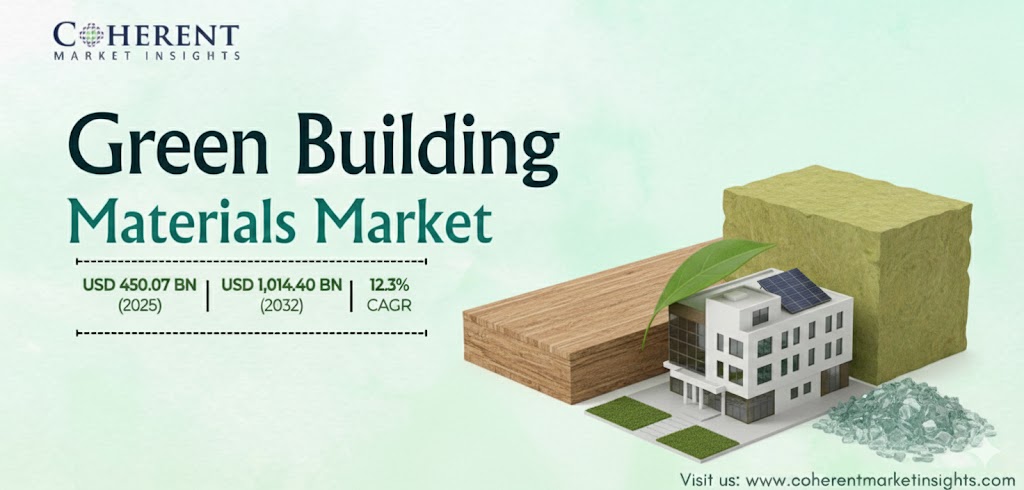
Photo by Globe Newswire
Key Takeaways:
- The Green Building Materials Market is estimated to reach USD 1,014.40 billion by 2032.
- A 12.3% compound annual growth rate (CAGR) is forecast from 2025 to 2032.
- Buildings account for nearly 40% of total energy consumption and carbon emissions worldwide.
- Government regulations promoting energy efficiency drive the growing preference for green materials.
- Consumer demand for low-carbon solutions is fueling rapid adoption of sustainable construction.
Market Growth Overview
The Green Building Materials Market, valued at USD 450.07 billion in 2025, is on track to reach USD 1,014.40 billion by 2032. According to Coherent Market Insights, this growth reflects a remarkable 12.3% compound annual growth rate (CAGR). Sector analysts cite rapidly evolving consumer preferences, robust government support, and heightened environmental consciousness as the primary catalysts behind this expansion.
Sustainability and Demand Drivers
The construction industry’s pivot toward energy-efficient, low-carbon alternatives has created immense demand for green building materials. This shift is powered by consumer awareness of environmental impact, alongside local and regional policies that emphasize compliance with strict sustainability guidelines. Buyers are increasingly seeking healthier, more sustainable spaces, which in turn pushes construction firms to favor eco-friendly products and practices.
Regulatory Impact
Around the globe, governments are rolling out regulations designed to cap carbon emissions and make structures more energy efficient. Such policies not only encourage the use of recycled or environmentally responsible materials but also offer incentives to early adopters. These regulations serve as a powerful market driver, keeping upward pressure on the demand for eco-friendly materials across the construction sector.
Environmental Significance
With buildings accounting for approximately 40% of global energy consumption and carbon emissions, the sector’s environmental cost is too large to ignore. The popularity of green materials—from advanced insulation to sustainably sourced structural components—reflects a growing sense of urgency to tackle climate change. As construction practices evolve, green building materials are increasingly recognized as a critical tool in achieving emissions-reduction goals.
Looking Ahead
The steady rise of this market underscores a collective effort to build a future where construction is both profitable and planet-friendly. Projected figures, such as the more than USD 1 trillion valuation by 2032, highlight a shift in mindset within the building industry. Whether driven by regulatory requirements, consumer demand, or corporate social responsibility, green building materials have moved from niche offerings to foundational elements of modern construction.