A recent study reveals that Sweden’s lake ice is becoming thinner and weaker, posing risks for winter enthusiasts who enjoy skating and fishing. Climate fluctuations have disrupted the formation of strong core ice, leading to an increase in fragile white ice over the past 50 years.
Subscribe
Adventure Tourism
Analysis and Opinions
Global Warming Effects
Safe Practices
Lake ice is getting weaker in Sweden, posing risks for winter activities

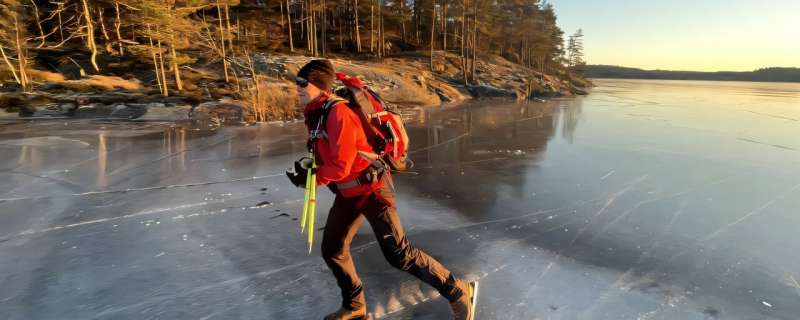
Photo by Phys.org
Key Takeaways:
- Sweden’s lake ice is thinning and weakening over time.
- Increase in fragile white ice due to climate fluctuations.
- Reduced safety for winter activities on frozen lakes.
- Need for improved ice monitoring and safety guidelines.
- Variations in ice quality require continuous assessment.
Sweden’s Lake Ice Weakens: A Warning from Scientists
The Changing Structure of Lake Ice
Sweden’s frozen lakes, once reliable platforms for winter activities like skating and fishing, are becoming increasingly unpredictable. Researchers from the Universities of Gothenburg and Uppsala have found that over the past five decades, the ice covering 21 Swedish lakes has decreased in thickness by an average of 0.22 centimeters per year. More concerning is the shift in the ice’s structural integrity.
Ice made from frozen slush or snow, known as white ice, is much weaker than core ice, which forms when lake water freezes during sustained cold. “By 2023, nine of the lakes surveyed had become unsafe for ice skaters, winter fishermen, and others who depend on frozen lakes,” says Mark Peternell, Senior Lecturer in Structural Geology at the University of Gothenburg. “This is mainly because the air temperature changes more during the winter than before.”
Impact of Climate Change
Long periods of sub-zero temperatures are becoming rarer in Sweden due to climate change. These temperature fluctuations lead to more frequent freeze-thaw cycles, disrupting the formation of strong core ice. Warm days prevent the consistent development of core ice, resulting in an increased prevalence of fragile white ice laden with air bubbles and impurities.
Snowfall further complicates the situation by insulating the existing ice layer, slowing down the freezing process underneath. When snow on the ice melts and refreezes, it contributes to additional layers of weak white ice. This change means that even if the ice appears thick, it may not support the weight it once could.
Risks to Winter Activities
The weakening ice poses significant risks for those engaging in traditional winter activities. “It is not enough to simply measure the thickness,” Peternell emphasizes. “For anyone traveling on lake ice, it is crucial to assess the quality of the ice. Core ice is strong and dark, while white ice is cloudy and much weaker. In addition, the ice is not the same over an entire lake, so you need to examine the thickness and quality of the ice again and again.”
Safety Measures and Recommendations
Safety guidelines from the Ice Safety Council and the Swedish Snowmobile Owners’ Association state that safe core ice for walking or skating should be at least 10 centimeters thick, and at least 15 centimeters for snowmobiles. Before venturing onto the ice, it’s vital to check recent temperature trends, as warm days can quickly undermine the ice’s stability. Indicators such as cracking sounds or visible slush should serve as warnings.
To prevent an increase in winter accidents and fatalities, researchers recommend that organizations like the Ice Safety Council regularly monitor ice structures and develop better warning systems. They also stress the importance of reviewing ice safety guidelines and preparing society for the significant changes in ice conditions.
Conclusion
As climate change continues to alter the natural landscapes of Sweden, both authorities and the public must adapt to ensure safety. Increased vigilance, education, and updated safety protocols are essential to navigate the challenges posed by thinning and weakening lake ice. The traditions of winter can continue, but only with respect for the changing conditions and a commitment to safety.











