Mexico’s renewed focus on refining its own crude has faced serious operational roadblocks. Pemex’s expanded and upgraded plants are running at just 58% capacity, leaving the country reliant on imported fuels despite lofty self-sufficiency goals.
Subscribe
Export-Import Trends
Policy Analysis
Mexico Has More Refining Capacity. So Why Are Fuel Imports Rising?

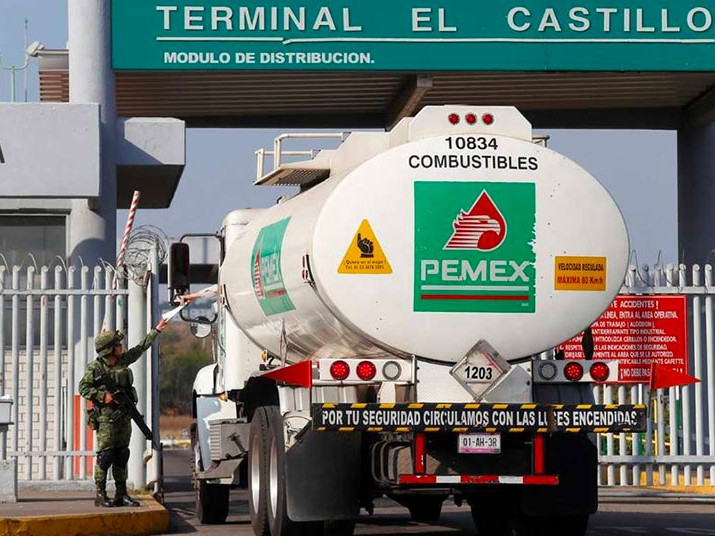
Photo by Oil Price
Key Takeaways:
- Mexico continues pushing for fuel self-sufficiency but struggles to run refineries efficiently
- Pemex has built refining capacity faster than it can reliably operate
- Refineries processed only about 1 million barrels per day in Q2 2026, roughly 58% of installed capacity
- Strong cracks for refined products theoretically favor domestic refining
- Mexico still imports significant volumes of fuel despite these upgrades
Background on Mexico’s Refining Efforts
Mexico has made a concerted push to refine more of its own crude, aiming to curb the volume of imported fuels. The country’s state oil company, Pemex, has led these efforts, building new refineries and upgrading existing ones.
Operational Challenges at Pemex
Yet, expansions are only part of the equation. The state oil giant must also operate these newly added capacities efficiently. According to recent data, Pemex has “built and upgraded refining capacity faster than it has learned to operate it reliably,” resulting in underutilized facilities.
The Q2 2026 Reality
The mismatch between policy ambitions and on-the-ground results became clear in the second quarter of 2026. Despite the push to rely more on domestic facilities, “Mexican refineries processed only around 1 million b/d (58% of installed capacity).” This indicates that, in practice, Mexico is still relying heavily on external fuel sources, even as it attempts to prioritize domestic refining.
Implications for Fuel Self-Sufficiency
Refined product cracks remain strong globally, suggesting that additional domestic refining could be profitable in principle. However, if Pemex cannot operate its refineries at a higher rate, the strategy falters. The disconnect between added capacity and actual throughput underscores the difficulty of quickly transitioning from reliance on imports to true self-sufficiency.
Where Mexico Stands Now
While expanding capacity looks good on paper, sustaining high utilization rates is essential to achieve genuine independence from foreign fuel. At present, spurred by a combination of operational struggles and persistent demand, Mexico continues to import significant fuel volumes. The shortfall in domestic refining output challenges the very essence of the country’s fuel independence strategy.