NVIDIA recently showcased Neural Texture Compression (NTC) at GTC 2026, highlighting its potential to cut VRAM usage by up to 85%. Although available as an SDK since early 2026, this technology has yet to be adopted by game developers, signaling a vast frontier for more efficient and visually enhanced gaming.
Subscribe
Industry News
NVIDIA Shows Neural Texture Compression Cutting VRAM by 85% or Boosting Quality for the Same Budget

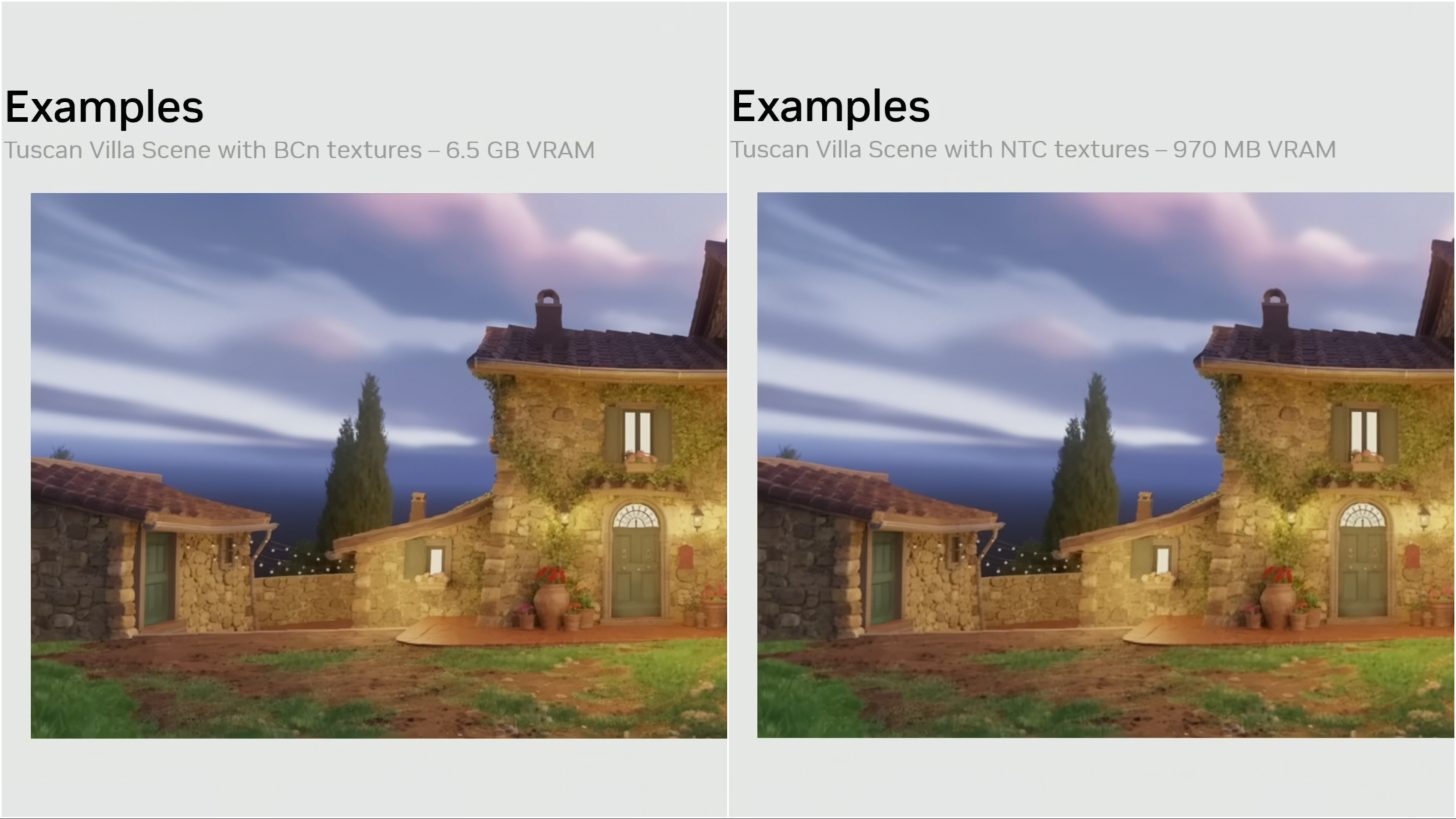
Photo by Wccftech
Key Takeaways:
- Neural Texture Compression (NTC) can reduce VRAM usage by up to 85%.
- NTC was introduced at GTC 2026 and has been available since early 2026.
- No game developers have implemented NTC so far.
- The technique relies on machine learning to compress textures more efficiently.
- NTC could significantly enhance gaming aesthetics without requiring more memory.
The GTC 2026 Reveal
NVIDIA took the stage at GTC 2026 to revisit Neural Texture Compression, a machine learning approach geared toward reducing the storage burden of textures. While it initially premiered almost three years ago, the reintroduction underscores NVIDIA’s dedication to making NTC a game-changer.
How Neural Texture Compression Works
Neural Texture Compression replaces the direct storage of each texel with a compact learned latent representation. By compressing image data into smaller formats, developers can potentially free up to 85% of VRAM—or use the same memory budget to achieve higher-quality textures. This flexibility could transform PC gaming and graphics rendering, offering substantial performance gains.
Unrealized Potential
Despite being accessible through an SDK since early 2026, NTC has yet to be embraced by game developers. Senior DevTech Engineer Alexey Bekin reiterated the benefits of the technique and encouraged studios to consider it for future projects. The absence of real-world adoption indicates that the promise of NTC remains largely untapped.
Looking Ahead
With rising demand for more complex visuals and efficient hardware usage, NVIDIA’s Neural Texture Compression stands poised to address both needs. Whether it becomes a mainstay of the gaming industry will hinge on developers’ willingness to experiment with and ultimately embrace this innovative method of texture storage. As more creators discover its advantages, NTC may spark a paradigm shift in how games and other graphical applications manage memory and quality.