A groundbreaking study has revealed that ocean waters are becoming greener at the poles and bluer near the equator due to shifting phytoplankton populations. This significant change could impact marine food webs and global fisheries if the trend continues, signaling potential challenges for ecosystems and economies alike.
Subscribe
Breaking News
Global Warming Effects
Wildlife Protection
Ocean ‘Greening’ at Poles Could Spell Changes for Fisheries

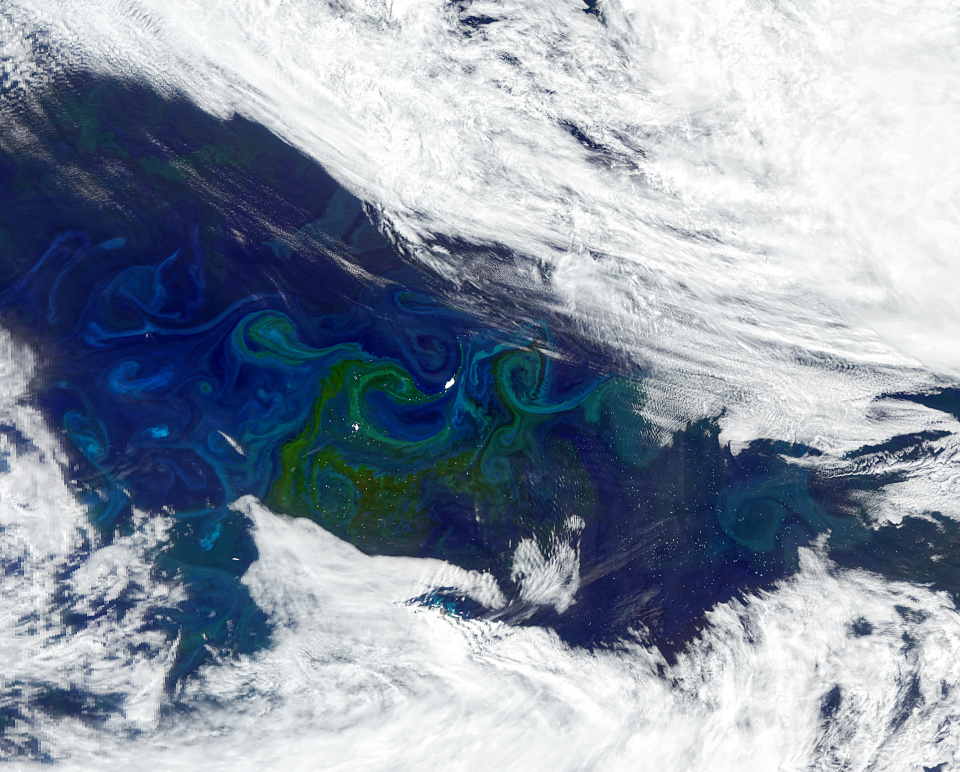
Photo by Georgia Institute Of Technology
Key Takeaways:
- Ocean colors are shifting, with greener waters at the poles and bluer seas near the equator.
- Changes are due to varying chlorophyll levels produced by phytoplankton.
- The study analyzed nearly two decades of satellite data using innovative methods.
- Warming sea temperatures correlate with changes in chlorophyll concentrations.
- Potential impacts include effects on marine food webs and global fisheries.
Oceans Show True Colors as Poles Turn Greener
A recent study published in Science has uncovered a significant transformation in our oceans: waters are becoming greener at the poles and bluer toward the equator. This shift, driven by changing concentrations of chlorophyll produced by phytoplankton, could have profound implications for marine ecosystems and the global fishing industry.
The Vital Role of Phytoplankton
Phytoplankton, microscopic marine organisms, form the foundation of the oceanic food chain. They produce chlorophyll, a green pigment that enables photosynthesis. The concentration of chlorophyll not only influences the color of ocean waters but also indicates the productivity of marine ecosystems.
“Phytoplankton act like sponges, soaking up carbon dioxide from the atmosphere,” explained Nicolas Cassar, the Lee Hill Snowdon Bass Chair at Duke University’s Nicholas School of the Environment. “Changes in their populations can have cascading effects on carbon storage and climate regulation.”
Analyzing Satellite Data with Economic Tools
The research team, including first author Haipeng Zhao of Georgia Tech, analyzed satellite data collected from 2003 to 2022 by a NASA instrument that surveys the Earth every two days. To interpret the vast amount of data, they borrowed concepts from economics known as the Lorenz curve and the Gini index, typically used to assess wealth distribution.
“We thought, let’s apply these concepts to see whether the proportion of the ocean that holds the most chlorophyll has changed over time,” Cassar said.
Their analysis revealed that chlorophyll concentrations are decreasing in subtropical and tropical regions while increasing near the poles. “It’s like rich people getting richer and the poor getting poorer,” Zhao observed, highlighting the growing disparity in chlorophyll distribution.
Warming Seas and Shifting Ecosystems
The study found that warming sea surface temperatures correlated with the changes in chlorophyll concentrations. Other factors, such as wind speed, light availability, and ocean mixing, showed no significant associations.
“If the poleward shifts in phytoplankton continue, they could affect the global carbon cycle,” noted Susan Lozier, dean of the College of Sciences at Georgia Tech. As phytoplankton die and sink, they sequester carbon in the deep ocean, influencing climate change dynamics.
Potential Impact on Global Fisheries
A persistent decline in phytoplankton near the equator could disrupt marine food webs, particularly affecting nations reliant on fisheries for food and economic development. “Phytoplankton are at the base of the marine food chain,” Cassar emphasized. “If they are reduced, then the upper levels of the food chain could also be impacted, which could mean a potential redistribution of fisheries.”
The Need for Continued Research
The authors caution that their findings cannot yet be definitively linked to climate change due to the study’s relatively short time frame. “Having measurements for the next several decades will be important for determining influences beyond climate oscillations,” Lozier stated.
Continued monitoring and research are essential to understand these trends fully and to prepare for potential ecological and economic impacts.
Funding for the study was provided by the National Science Foundation and NASA.