A federal appeals court has declared the vast majority of Donald Trump’s tariffs illegal, citing improper use of emergency powers. The ruling is on hold until October 14, setting up a likely showdown at the Supreme Court that could reshape the balance of power over U.S. trade policy.
Subscribe
Breaking News
International Politics
Policy Analysis
US Federal Appeals court rules that most of Trump’s tariffs are illegal

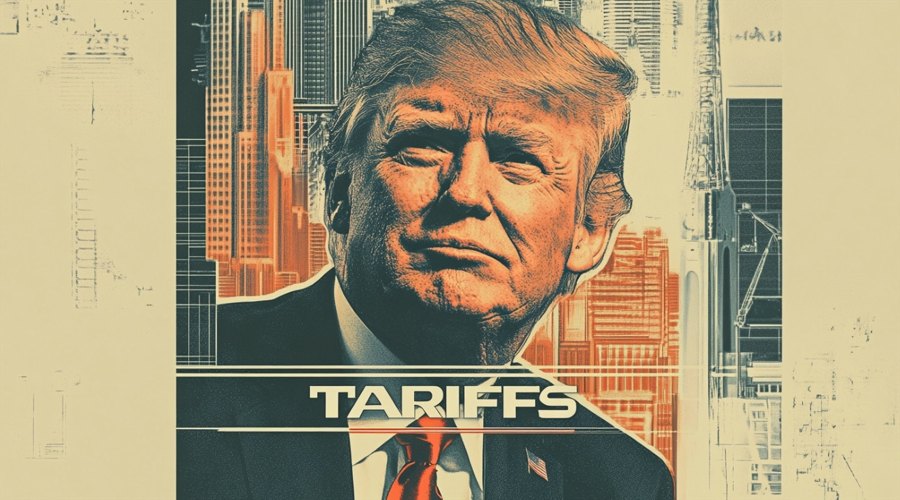
Photo by Forexlive
Key Takeaways:
- Most of Trump’s tariffs were ruled illegal under the International Emergency Economic Powers Act
- The court’s 7-4 decision is stayed until October 14
- Tariffs targeting Brazil and India remain outside this lawsuit
- This challenge highlights Congress’s constitutional authority over tariffs and taxes
- The case is expected to advance to the Supreme Court, potentially reshaping trade rules
Introduction
On Friday evening, a 7-4 ruling by the Federal Circuit court invalidated the bulk of tariffs imposed under former President Donald Trump, deeming them illegal under U.S. laws granting Congress the authority to control tariffs and tax policy. The judges contended that the International Emergency Economic Powers Act (IEEPA) was used in a manner not intended by Congress.
Background on Trump’s Tariffs and IEEPA
Trump justified the tariffs under a 1977 U.S. law that conveys broad emergency powers to the President in response to an “unusual and extraordinary threat” originating outside the United States. Historically, presidents have used these provisions to sanction adversarial countries like Iran or North Korea, rather than established trade partners.
Court’s Reasoning and Legal Arguments
The majority of the judges scrutinized the language of the IEEPA, noting that it authorizes the President to “regulate… importation” but does not necessarily confer the power to impose duties and tariffs. They also contrasted this language with past congressional acts that specifically included words like “duty” or “tariff” where such authority was intended. The court underscored Article 1 of the U.S. Constitution, which entrusts Congress with the power to “lay and collect Taxes, Duties, Imposts and Excises.”
Immediate Consequences and Next Steps
Although the ruling was emphatic, it was immediately stayed until October 14, giving the government a window to appeal. The case will likely move to the Supreme Court, where justices may adopt a narrower position or confirm the lower court’s decision. Separately, the Court of International Trade has been tasked with deciding whether tariffs should continue to be collected and how extensive an injunction might be.
Broader Political and Economic Implications
Notably, tariffs targeting Brazil under former President Bolsonaro and India over Russian oil imports remain unaffected by this legal challenge. Still, experts suggest the decision could undermine the use of tariffs as a negotiating lever, potentially altering the executive branch’s approach to future trade disputes. The outcome might also compel congressional Republicans, many of whom champion free trade, to re-examine or reaffirm their stances on tariffs.
From a global economic perspective, removing tariffs could support stronger growth in commodities, commodity-linked currencies, and industrial sectors. However, the bond market response might be more complex, as lower tariffs can temper inflation yet reduce federal revenue streams.
Conclusion
The stay until mid-October and the near-certain Supreme Court appeal indicates a prolonged legal battle. The final resolution could redefine the scope of presidential authority to regulate importation and confirm the U.S. Constitution’s mandate that Congress has the power to lay uniform duties. With so much at stake—both for domestic politics and global trade—the next phase of this legal journey promises to shape the country’s economic and legislative landscape in profound ways.