Throughout history, warfare has been a catalyst for technological advancement and societal change. From the rudimentary weapons of prehistoric societies to the sophisticated tactics of ancient empires, early innovations in warfare significantly altered the course of human civilization.
Subscribe
Ancient Civilizations
Ancient Warfare Innovations: How Early Armies Changed the Course of History

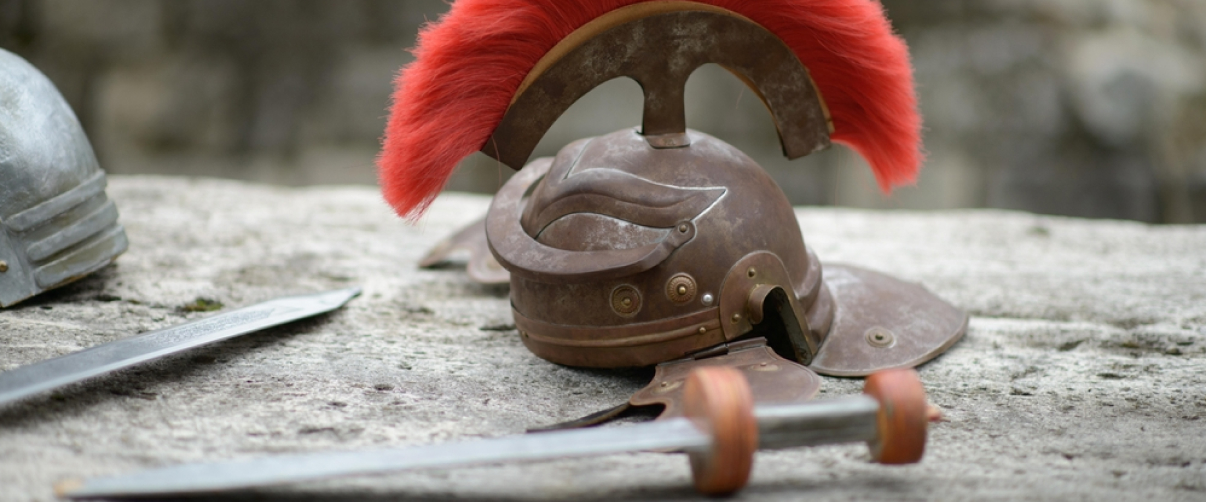
Image: @shutterstock 2596845757
The Dawn of Military Technology
The earliest evidence of military-specific technology dates back to around 8000 BCE with the stone walls of Jericho. These fortifications signify the first known use of technology explicitly designed for warfare. As societies transitioned from nomadic lifestyles to settled communities, the need to defend resources became paramount.
One of the fundamental advancements was the evolution of weapons from tools used in hunting. For instance, the spear thrower and the simple bow, initially designed for hunting animals, were adapted for combat. This adaptation marked a pivotal shift in human conflict, laying the groundwork for organized warfare.
The Bronze and Iron Ages: A Leap in Weaponry
The advent of metallurgy revolutionized ancient warfare. The transition from stone to metal weapons began in the Chalcolithic period, also known as the Copper Age. During this time, the mace evolved from a simple stone head attached to a handle to more effective offensive weapons cast entirely from copper.[^1] This development not only enhanced the durability and lethality of weapons but also demonstrated the growing sophistication of ancient societies in metalworking.
The progression to bronze and eventually iron weapons further amplified these advantages. Iron helmets and armor became more prevalent, signaling a significant technological advancement in personal protection and offensive capabilities.[^1] These innovations allowed armies to engage in longer and more aggressive campaigns, altering the dynamics of warfare.
Chariots and Cavalry: Mobility on the Battlefield
The introduction of the chariot around 1800 BCE was a game-changer in military tactics. Chariots provided unparalleled mobility and a tactical advantage over foot soldiers, especially in open terrains.[^2] They became a symbol of power and were integral to the military successes of ancient civilizations like the Egyptians and Hittites.
As horse domestication advanced, cavalry units emerged. Cavalry, especially heavy cavalry units wearing armor, gained prominence and transformed military engagements.[^3] The speed and power of mounted troops allowed for rapid movements on the battlefield, flanking maneuvers, and effective charges against enemy formations.
Infantry Formations and Military Organization
Ancient armies began to develop complex infantry formations to maximize the effectiveness of their soldiers. The Greek phalanx, for example, was a tight-knit formation of heavily armed infantrymen armed with spears and shields. This formation relied on discipline and unity, making the soldiers a formidable force against less organized opponents.[^4]
Similarly, the Roman legions engineered a flexible and disciplined approach to warfare. Their system allowed for adaptability on the battlefield, contributing to Rome’s expansive conquests. The emphasis on training, organization, and strategy showcased the innovative military thinking of ancient civilizations.[^4]
Naval Innovations: Dominance at Sea
Warfare was not confined to land. Maritime powers recognized the importance of controlling the seas for trade and military dominance. The development of warships like the Greek trireme, equipped with rows of oars and reinforced bows for ramming, revolutionized naval combat.[^4] Sea battles became an essential aspect of warfare, influencing the outcomes of numerous conflicts and the rise and fall of empires.
The Role of Technology in Societal Change
Military innovations often spurred broader societal transformations. The continuous evolution of defensive technologies, such as helmets and body armor, exemplified an ancient arms race between offensive and defensive capabilities.[^1] These advancements not only affected how wars were fought but also influenced social structures, economies, and political dynamics.
For instance, the need for stronger materials and weapons drove advancements in metallurgy and engineering. Armies required efficient supply chains, leading to improvements in logistics and infrastructure. The interplay between military needs and technological progress was a driving force in the development of ancient civilizations.[^1]
Conclusion
The innovations in ancient warfare were more than mere advancements in killing; they were pivotal developments that shaped human history. From the first fortified walls to the strategic formations of disciplined infantries, early armies harnessed technology and strategy to alter the course of civilizations.[^4] Understanding these innovations provides insight into how warfare has continually influenced societal progress and the ever-evolving nature of human conflict.
[^1]: Military Technology – Prehistory [^2]: The Evolution of Military Technology from Past to Present [^3]: Ancient Warfare – Wikipedia [^4]: Ancient Warfare Innovations