Nvidia CEO Jensen Huang criticizes U.S. chip export restrictions on China, asserting they harm American businesses more than China’s tech industry and may accelerate China’s innovation in semiconductors and AI.
Subscribe
Analysis and Opinions
Export-Import Trends
International Politics
Policy Analysis
Nvidia’s Jensen Huang thinks U.S. chip curbs failed — and he’s not alone

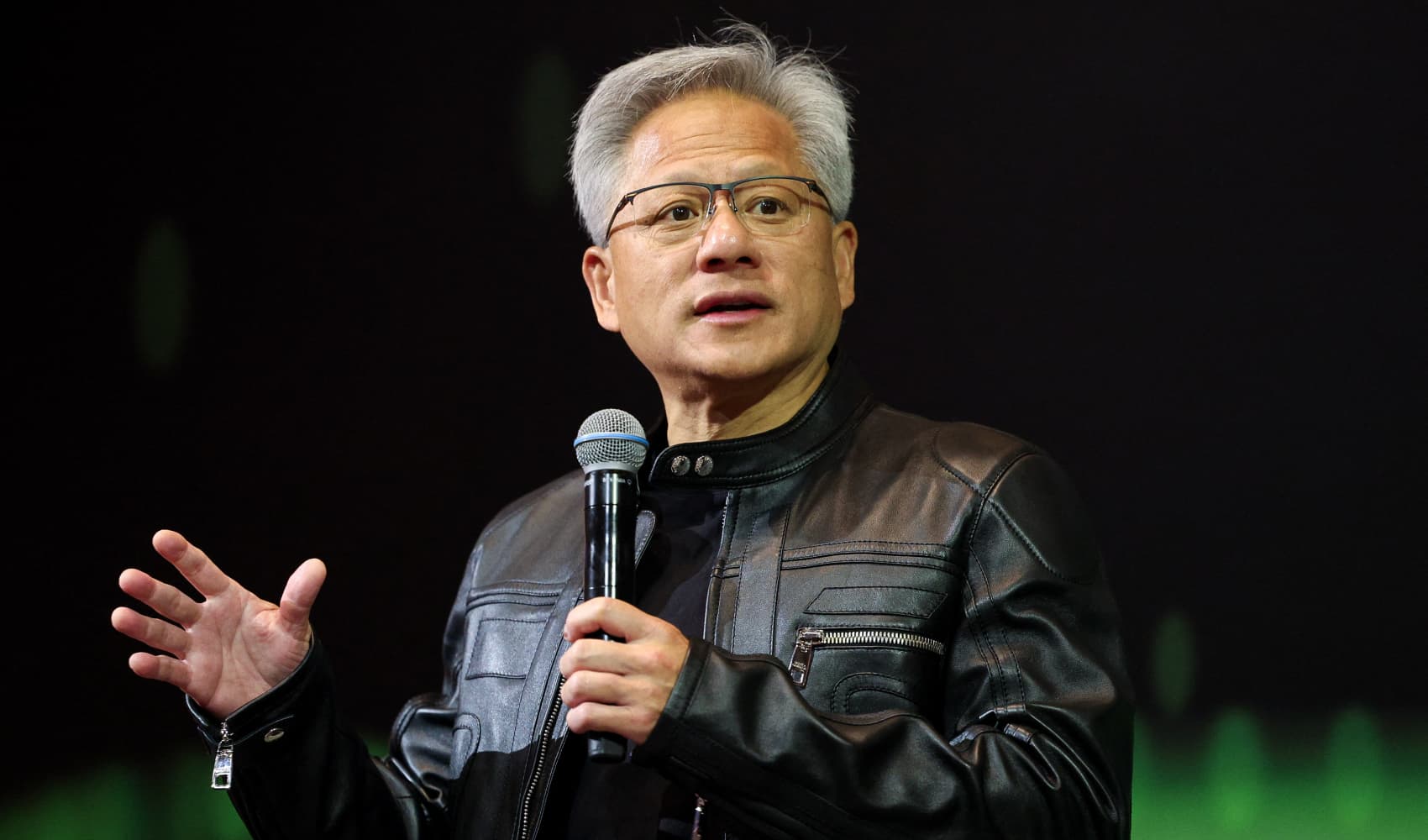
Photo by Nbc10 Philadelphia
Key Takeaways:
- Nvidia’s Jensen Huang says U.S. chip restrictions on China have failed.
- Export controls harm American companies more than China’s tech industry.
- China’s semiconductor and AI innovation accelerates due to restrictions.
- Experts and think tanks question the effectiveness of U.S. policies.
- Nvidia’s market share and revenues have significantly declined.
U.S. Chip Restrictions Under Fire
Nvidia CEO Jensen Huang has declared that U.S. semiconductor export controls on China have been “a failure,” causing more harm to American businesses than to China’s advancing tech industry. Speaking at the annual Computex technology trade show in Taipei, Huang emphasized that the restrictions have led to a significant decline in Nvidia’s market share in China, dropping from 95% to 50% over the past four years.
Impact on American Companies
U.S. chip restrictions, initially aimed at curbing China’s military advancements and maintaining American dominance in artificial intelligence, have adversely affected U.S. businesses. On April 15, Nvidia disclosed a $5.5 billion charge against its revenue due to new controls that restricted sales of its H20 graphics processing units to China. Industry leaders like Huang express concern over losing lucrative business deals and the long-term implications for innovation.
Experts Warn of Accelerated Chinese Innovation
“The effects of the controls are twofold. They have the impact of reducing the ability of U.S. companies to access the China market and, in turn, have accelerated the efforts of the domestic industry to pursue greater innovation,” said Paul Triolo, Partner and Senior Vice President for China at DGA Group. He noted that the restrictions “incentivized China to become self-sufficient across these supply chains in a way they never would have contemplated before.”
Ray Wang, an independent tech and chip analyst focusing on U.S.-China competition, echoed these sentiments, stating that China’s semiconductor and AI sectors have experienced an acceleration of startups, market opportunities, and talent development as a direct result of the export controls.
Questioning Policy Effectiveness
The effectiveness of U.S. export controls is increasingly under scrutiny. The Information Technology & Innovation Foundation (ITIF), a U.S. think tank, criticized the policy, stating that “the Biden administration’s export control policy for AI chips has largely been a failure since day one.” Stephen Ezell of ITIF commented, “While [the U.S. government] is certainly right to prevent U.S. companies from selling advanced AI technology to the Chinese military, cutting U.S. companies off from the entire commercial Chinese market is a cure worse than the disease.”
Ezell highlighted that U.S. export controls have cost Nvidia at least $15 billion in sales. “Those are revenues the company needs to be able to earn to invest in future generations of innovation,” he added, underscoring the long-term impact on American technological leadership.
Shifting Goals and Unintended Consequences
Analysts point out that the objectives of the export controls have evolved, leading to confusion and unintended outcomes. “We are not just talking about one export control; we are talking about a series of export controls that originate from all the way back in 2019,” said Wang. He noted that the evolving policies have had multiple objectives, with the latest measures appearing to aim at slowing down and containing China’s AI and semiconductor developments.
Triolo described the situation as a “moving of the goalposts,” expressing concern over the lack of a clear endgame. “The continued expansion of the controls, and the lack of an articulation of what the clear end game here is, has really created a lot of issues, and created a lot of collateral damage,” he said.
The Path Forward
As China’s technological capabilities continue to advance, industry leaders and experts call for a reassessment of the U.S. approach. The potential for self-inflicted harm to American businesses and the acceleration of China’s self-sufficiency efforts raise critical questions about the long-term efficacy of the current export control policies.
Huang’s warning serves as a poignant reminder that strategies intended to maintain technological superiority must be carefully designed to avoid unintended consequences that could undermine the very goals they aim to achieve.