In a groundbreaking launch, SpaceX has sent Japanese and U.S. lunar landers on separate missions to the Moon, marking a significant advancement in the race to commercialize Earth’s lunar neighbor. The missions by ispace and Firefly Aerospace aim to establish a business presence on the Moon and pave the way for future exploration.
Subscribe
Breaking News
Robotics
Space Technology
SpaceX Launches Japanese and Texas Lunar Landers to the Moon

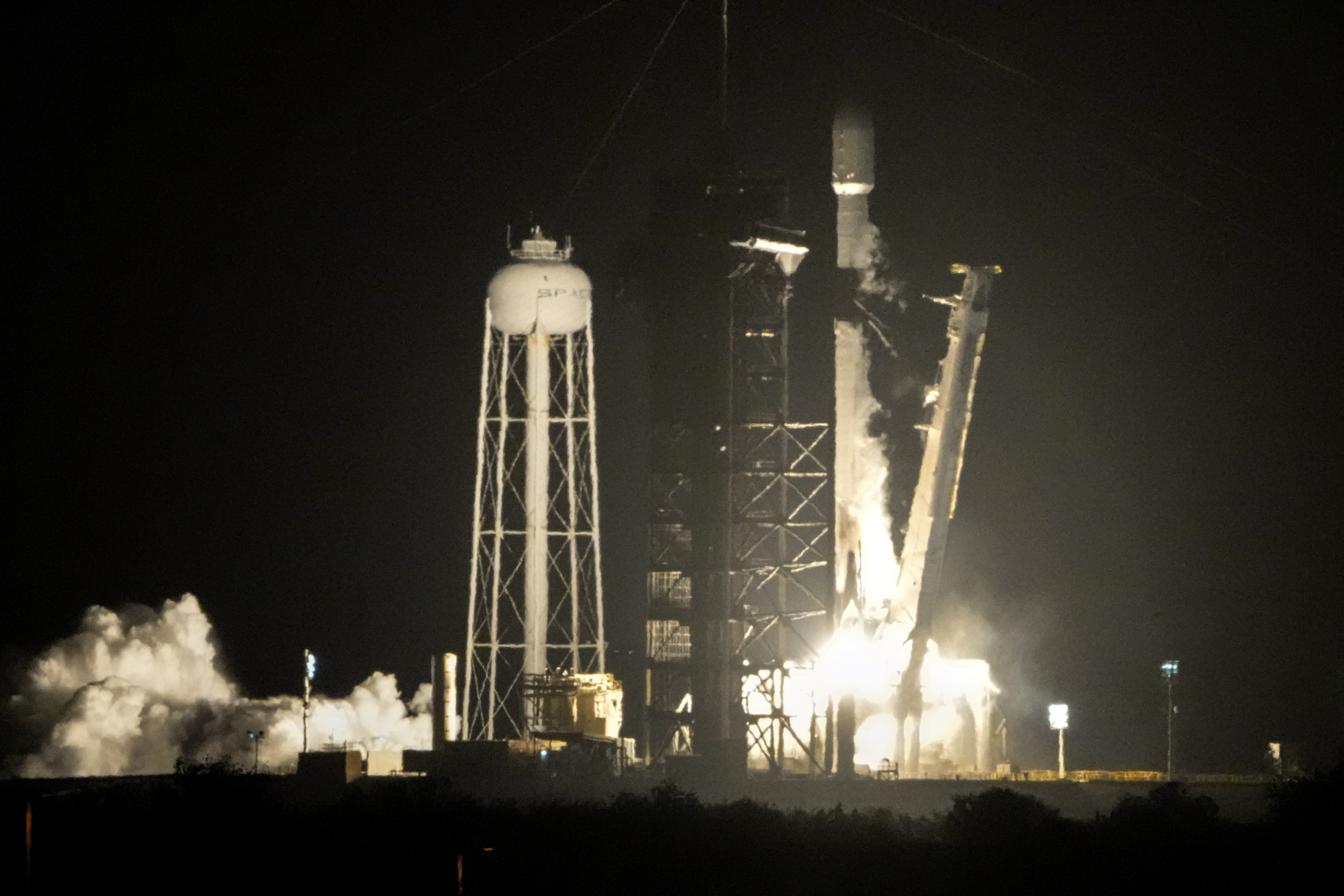
Photo by Newsweek
Key Takeaways:
- SpaceX launched two lunar landers from ispace and Firefly Aerospace, marking a significant step in lunar commercialization.
- Ispace’s mission is its second attempt after a failed landing in 2022, aiming to collect lunar soil samples and test for water and food sources.
- Firefly’s Blue Ghost lander carries 10 NASA-funded experiments to study lunar dust, subsurface temperatures, and regolith management.
- The landers are set to land at different lunar locations in early 2025, with Blue Ghost touching down first.
- NASA’s substantial investment in these missions underscores the growing role of private companies in lunar exploration.
SpaceX Rockets Dual Lunar Landers Toward the Moon
In a significant leap for lunar exploration, SpaceX launched two lunar landers on separate missions early Wednesday, marking a pivotal moment in the commercialization of the Moon. The Falcon 9 rocket lifted off from NASA’s Kennedy Space Center, carrying landers from Japanese company ispace and U.S.-based Firefly Aerospace.
A Shared Journey Begins
The two spacecraft shared a ride aboard a single Falcon 9 rocket, a strategic move that reduced costs for both companies. An hour into their journey, the landers diverged, each embarking on its own months-long trek to the Moon.
Ispace’s Resilience: A Second Attempt
For ispace, this mission represents a second chance after its first lander crashed during a landing attempt in 2022. The new lander, aptly named “Resilience,” aims to touch down in the northern region of Mare Frigoris in late May or early June. It carries an 11-pound rover designed to collect lunar soil samples and test for potential water and food sources—crucial elements for future lunar colonization.
“We don’t think this is a race. Some people say ‘race to the Moon,’ but it’s not about the speed,” said ispace CEO Takeshi Hakamada.
Firefly’s Blue Ghost and NASA’s Investment
Texas-based Firefly Aerospace’s Blue Ghost lander stands at 6 feet 6 inches tall and is expected to land first, in early March, at Mare Crisium, a volcanic plain. The lander is equipped with a suite of 10 NASA-funded experiments, including a vacuum to collect lunar dust, a drill to measure subsurface temperatures, and a device to help astronauts manage the Moon’s abrasive regolith.
“We’ve done everything we can on the design and the engineering,” said Firefly CEO Jason Kim, acknowledging the challenges ahead given the Moon’s history of failed missions.
Preparing for Lunar Daytime Operations
Both landers plan to operate during the lunar daytime for approximately two weeks before shutting down to avoid the extreme cold of the lunar night. Should both missions succeed, ispace’s rover will conduct experiments at a cautious pace of just a few centimeters per second. Among its payload is a miniature red house designed by a Swedish artist, serving as a symbolic gesture for future lunar exploration.
The Commercial Race to the Moon
The launch signifies a growing momentum in private-sector lunar missions. “We’re sending a lot of science and technology ahead of time,” said NASA’s Nicky Fox, highlighting the preparatory steps being taken before astronauts return to the Moon under the Artemis program.
The landscape of lunar exploration is becoming increasingly crowded. Houston-based Intuitive Machines is set to launch its second lunar mission by the end of February, following its successful landing last year—the first U.S. lunar touchdown in over 50 years.
Looking Ahead
As private companies like ispace and Firefly Aerospace take bold steps toward the Moon, the era of commercial lunar exploration is accelerating. These missions not only aim to advance scientific understanding but also to establish a sustainable human presence on the lunar surface.
This article contains additional reporting from The Associated Press.